
What to Eat in Krabi: A Southern Thai Food Guide
By the Thongyib Thongyod team · Updated 8 July 2026
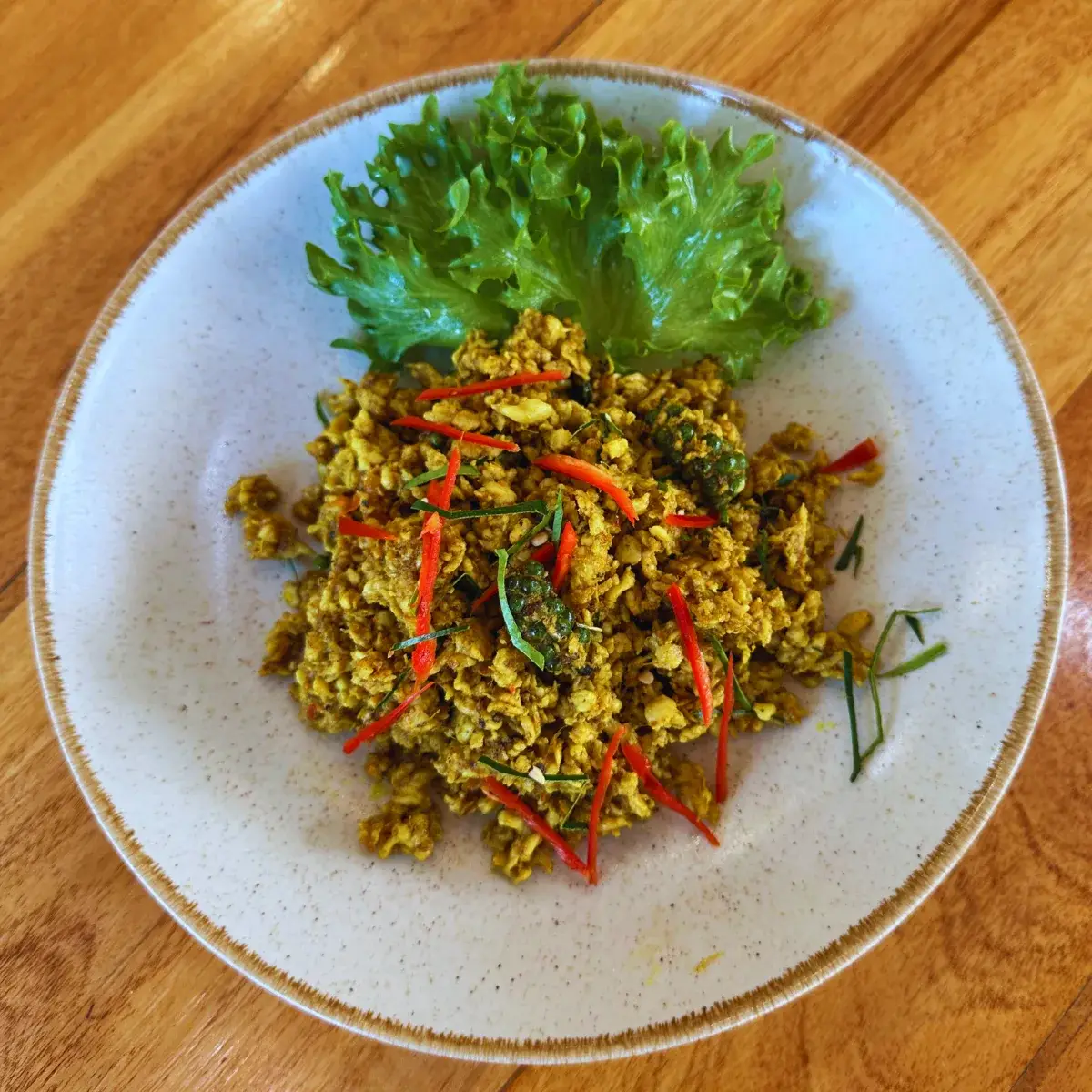
What to eat in Krabi comes down to southern Thai cooking — the hottest, most turmeric-heavy food in the country — plus a lot of very fresh seafood and a serious sweet tradition. The dishes to hunt down are khua kling (a dry, fiery chilli stir-fry), gaeng som (sour orange curry), turmeric fried fish, phu pad pong karee (curry crab), and roti for a snack. You will eat the savoury stars best at local kitchens, night-market stalls and the seafood houses along Nopparat Thara; the sweet finish — mango sticky rice and golden egg-yolk desserts — is where we come in. This is what to order, and where.
In short:
- Krabi’s food is southern Thai: hotter and more turmeric-forward than central or northern cooking.
- The must-try savoury dishes: khua kling, gaeng som, turmeric fried fish, phu pad pong karee (curry crab) and roti.
- Eat the curries and seafood at local kitchens, night-market stalls and the open-air seafood houses along Nopparat Thara.
- Southern food is often genuinely spicy — ask for it “phet” for the real heat, or start mild.
- We own the sweet, brunch and coffee end: mango sticky rice, golden thongyib and thongyod, and signature coffees, 8:00–18:00.
We run Thongyib Thongyod, a brunch and dessert cafe in Khlong Haeng, and we will be straight with you from the start: we are not a southern-curry house. We do sourdough brunch, signature coffees and traditional Thai sweets, and we send our own guests out to the local kitchens and seafood halls for the fiery stuff. So this guide is written the way we actually talk to visitors across the counter — here is the real Krabi food to chase, honestly pointed to where it is cooked best, with our own corner of the day marked clearly at the end.
What makes Krabi’s food southern Thai?
Heat, turmeric and the sea. Southern Thai cooking is widely considered the spiciest regional cuisine in the country, built on fresh chilli, black pepper, turmeric, shrimp paste and the coast’s endless supply of fish and shellfish. Where central Thai food leans sweet and northern food leans herbal, the south leans fierce and pungent — golden with turmeric, sharp with the sourness of local fruits, and unafraid of salt from fermented shrimp and fish.
That intensity is the point, and it is worth arriving prepared. Kitchens across Krabi automatically tone down the chilli for foreign diners, which is kind but means you may never meet the real dish. If you want the genuine version, say “phet” (spicy) — and if you are not sure of your tolerance, start with one properly hot dish among milder plates rather than ordering a whole fiery table at once. For the wider strategy of which streets and which kind of place to pick for each meal, our where to eat in Ao Nang guide is the companion to this one.
Which southern Thai dishes should you order?
Start with khua kling, gaeng som, turmeric fried fish, curry crab and roti — five dishes that between them tell you almost everything about how the south eats. Here is what each one is and where it is cooked best.
| Dish | What it is | Where to try it |
|---|---|---|
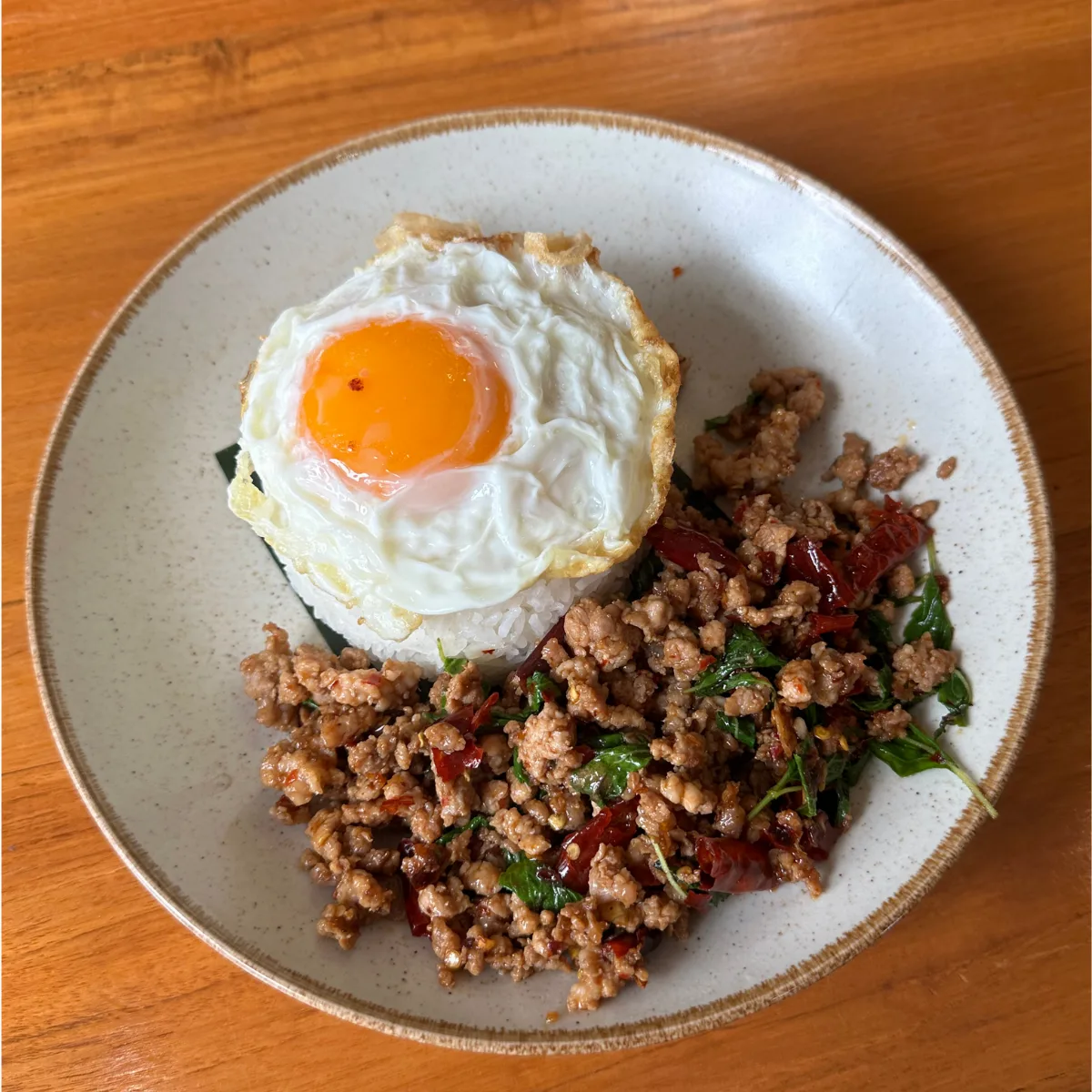
| Khua kling | A dry curry: minced pork, beef or chicken fried with fiery chilli-turmeric paste until no liquid is left | Local Thai kitchens a street back from the beach; some night-market stalls |
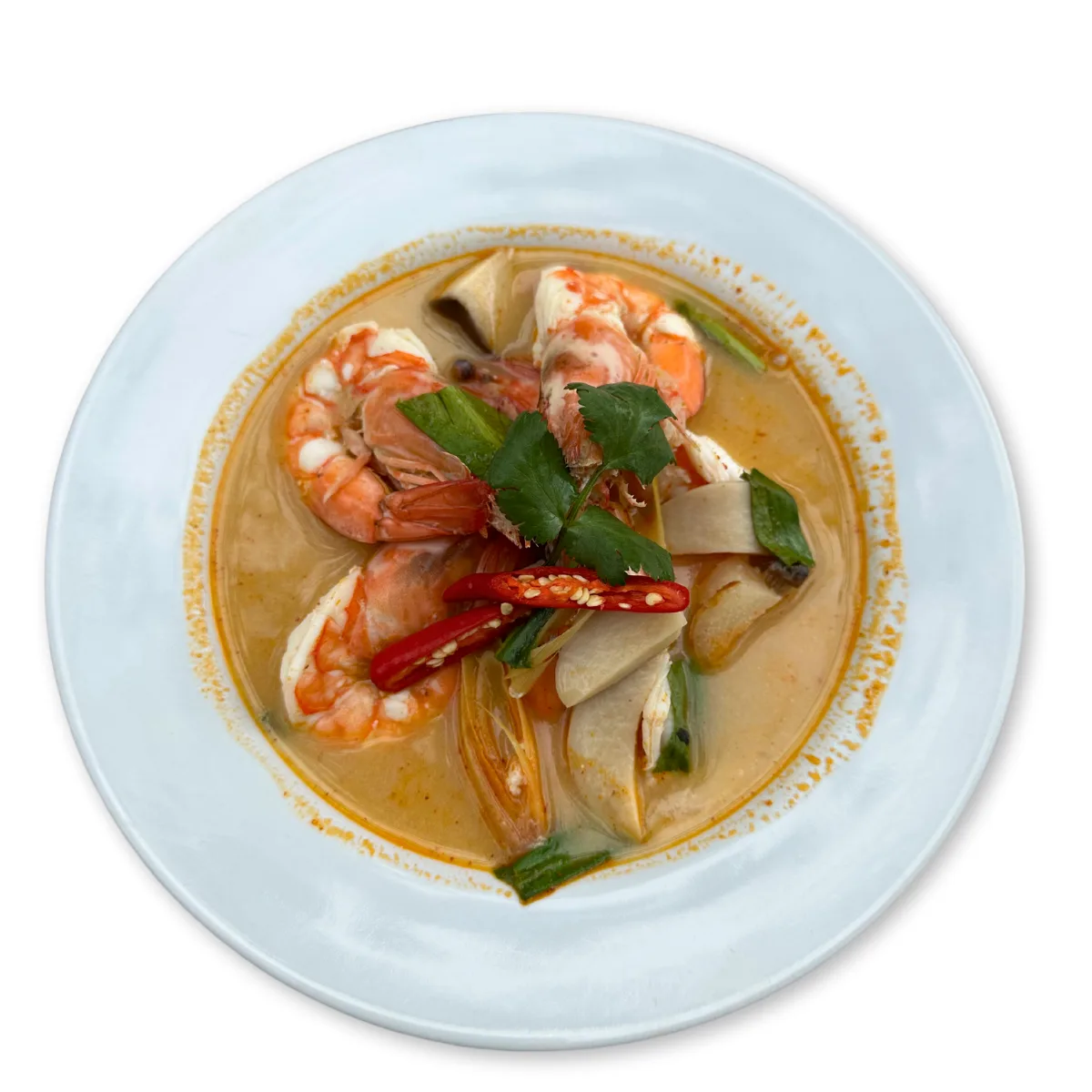
| Gaeng som | Sour orange curry — a thin, tamarind-sour, chilli-hot soup, usually with fish and vegetables | Local kitchens and seafood houses along Nopparat Thara |
| Turmeric fried fish (pla tod khamin) | Whole fish or fillets marinated in turmeric and garlic, then fried golden and crisp | Seafood houses and local kitchens; a southern staple |
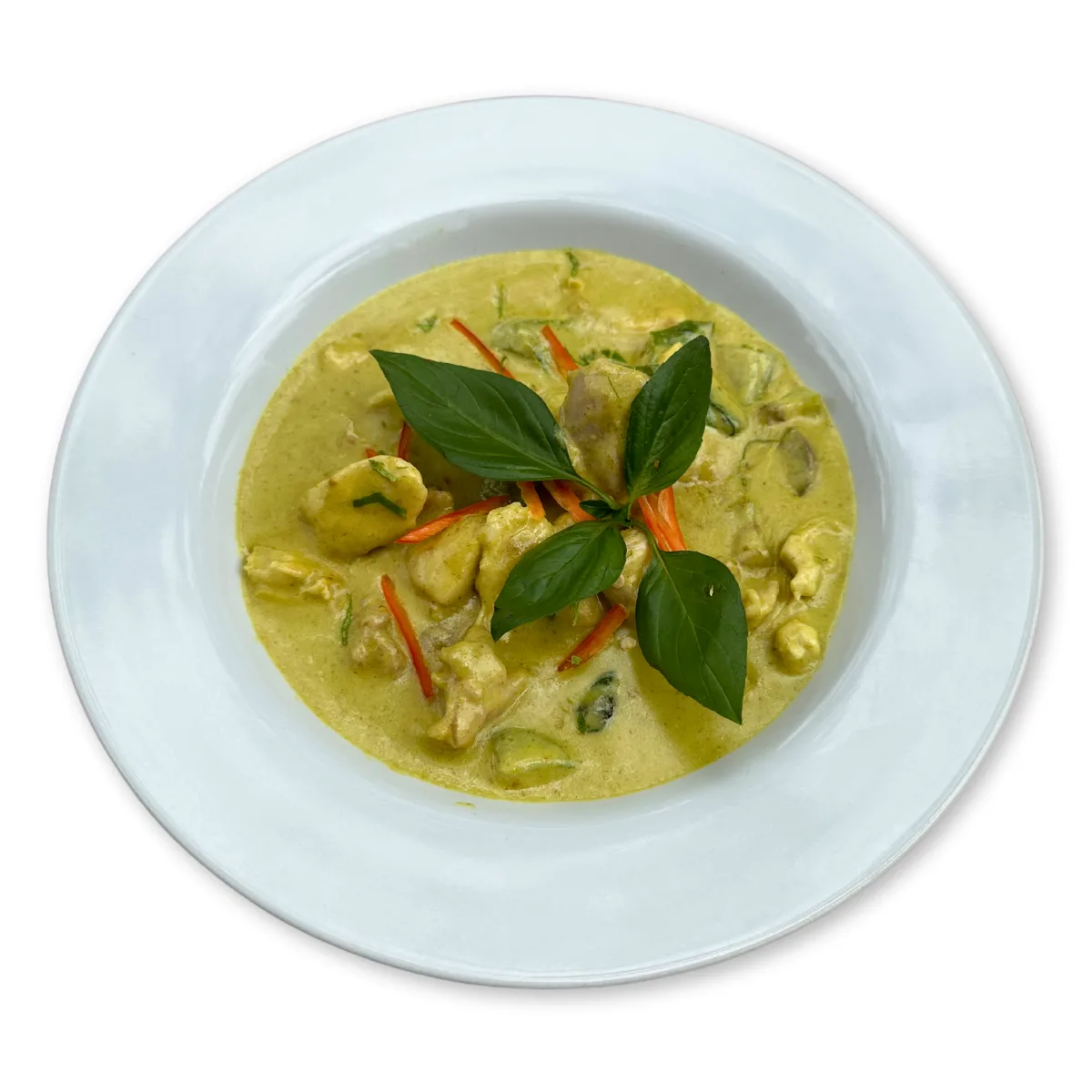
| Phu pad pong karee | Crab stir-fried in a mild, creamy yellow curry powder and egg sauce | The open-air seafood houses along Nopparat Thara, priced by weight |
| Roti | Griddled, flaky flatbread — savoury with curry, or sweet with banana and condensed milk | Night-market stalls and roadside carts, especially in the evening |
A few notes on the stars. Khua kling is the one to try if you try only one — dry, aromatic and hot, eaten with a mound of plain rice to carry the heat, it is as southern as food gets. Gaeng som looks unassuming and hits like a wave: sour, salty and spicy all at once, it is a local everyday favourite rather than a tourist dish, so finding it well made is a good sign you have picked the right kitchen. Phu pad pong karee is the gentle one, mild and rich, and the crab is priced by weight at the seafood houses, so ask the price per kilo before it goes to the wok. And roti crosses the line between savoury and sweet — dipped in curry it is a meal, folded with banana and condensed milk it is dessert.
Planning your Krabi eating day? Bookend it at our table — we open at 8:00 for brunch and close at 18:00 with mango sticky rice and coffee, five minutes from Nopparat Thara Beach. See the menu · Get directions
Where do you actually find these dishes?
Not with us — and we mean that helpfully. The fiery southern curries and the by-weight seafood are cooked best at three kinds of place, none of them a cafe:
- Local Thai kitchens, a street or two back from the beach. Look for laminated Thai-and-English menus, plastic chairs and a Thai lunch crowd. This is where khua kling, gaeng som and turmeric fried fish are cheapest and sharpest — usually 80–150 baht a plate against 150–300 on the beachfront terraces.
- The open-air seafood houses along Nopparat Thara. Bright, unglamorous halls with live tanks, priced by weight, full of local families ordering too much. This is the home of curry crab, whole fried fish, and grilled prawns. Always confirm the price per kilo first.
- Night-market stalls at Ao Nang Landmark. For roti, grilled skewers, som tam pounded to order and a huge spread of dishes for 50–120 baht each. It is the best value per baht in town and the easiest place to graze several southern snacks in one evening. Cash only, and it hits its stride after 18:00 — conveniently, just as we are closing next door.
We point our own guests to all three constantly. A cafe cannot fry a crab to order or keep a live tank, and pretending otherwise would not help you eat well. What we can do is take care of the other end of your food day.
What is the sweet side of Krabi food?
This is our corner, and it is a big one. Krabi’s dessert tradition runs from mango sticky rice — the dish most visitors fall for first — through coconut sweets and night-market snacks to the old royal golden desserts that our cafe is named after. Thongyib (ทองหยิบ, “pinched gold”) and thongyod (ทองหยอด, “golden drop”) are small, intensely golden egg-yolk sweets, each traditionally given as a wish for good fortune, and we make them fresh every day. The full, rather remarkable story — a Portuguese convent recipe carried into the Thai royal court in the 1600s — is told in our Thai desserts explained guide.
Here is where we happily plant our flag. We are the brunch, dessert and coffee end of the Krabi food day, not the curry end. Come to us for mango sticky rice at its best in Thai mango season (roughly March to June), for the golden sweets we are named after, and for signature coffees you will not find elsewhere — a Tom Yum coffee, a popcorn-caramel one, a yuzu coffee for a hot afternoon. Thais take these dense golden sweets with something bitter or hot to balance the richness, and a strong coffee does the job perfectly. Browse the full Thai desserts menu and you will see the shape of it: we finish the day, we do not fry the curry.
Practical information
- Spice: southern Thai food is toned down for visitors by default. Ask for “phet” for the real heat, or start with one hot dish among milder plates.
- Prices: local Thai kitchens 80–150 baht a plate; beachfront terraces 150–300 for the same dish; night-market plates 50–120; seafood priced by weight.
- Seafood: always confirm the price per kilo and the weight before it goes to the kitchen — reputable places tell you without hesitation.
- Cash: the night market and most local kitchens are cash-only; ATMs are plentiful on the strip.
- Timing: seafood houses are best 17:00–19:00 before tour groups land; the night market peaks after 18:00; we do the mornings and afternoons, 8:00–18:00.
- Season: mango sticky rice is at its peak in Thai mango season, roughly March to June, though good versions appear most of the year.
Quick answers
What food is Krabi known for? Southern Thai cooking — hotter and more turmeric-forward than food further north — plus abundant seafood. The signatures are khua kling, gaeng som, turmeric fried fish, phu pad pong karee (curry crab) and roti, with a sweet side from mango sticky rice to golden egg-yolk desserts.
Is southern Thai food very spicy? Often, yes — it is generally the spiciest regional cooking in Thailand. Kitchens tone it down for visitors, so ask for it “phet” if you want the real heat, or start mild.
Where should you eat southern Thai curries in Krabi? At local kitchens a street back from the beach, night-market stalls, and the open-air seafood houses along Nopparat Thara — cooked the way locals eat them, at local prices. We are a cafe, so we send you to those for the fiery dishes.
What is khua kling? A dry southern curry of minced pork, beef or chicken fried with a fiery chilli-turmeric paste until almost no liquid remains. Intense and aromatic, it is one of the defining dishes of the south, eaten with plenty of plain rice.
Where can we get dessert and coffee in Krabi? At our place — Thongyib Thongyod in Khlong Haeng, near Nopparat Thara Beach, serves mango sticky rice, our namesake golden sweets and signature coffees daily 8:00–18:00. We are the dessert-and-coffee end of the food day, not a curry house.
Eat Krabi properly and you will cover the whole range in a few days: a fierce khua kling and a sour gaeng som from a local kitchen, a by-weight crab at a seafood house, roti from a night stall — and, at the calm end of it, something golden and sweet with a good coffee. That last part is ours. Find us at Ao Nang Landmark in Khlong Haeng, open 8:00 to 18:00, whenever your day needs a sweet finish.