
Where to Eat in Ao Nang: An Honest Food Guide by Locals
By the Thongyib Thongyod team · Updated 8 July 2026
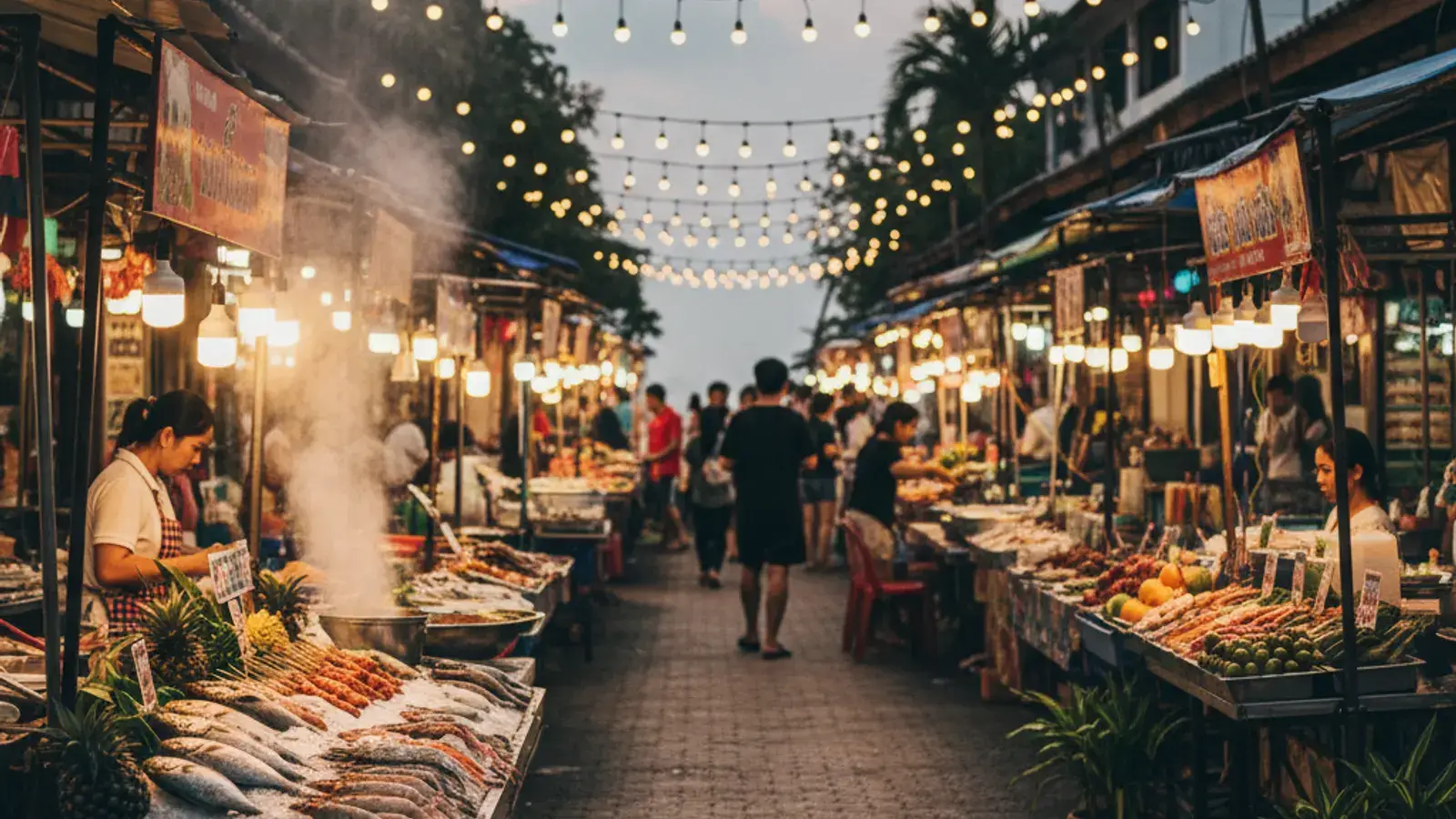
The short version of where to eat in Ao Nang: think in meals, not in restaurant names. Breakfast and brunch at our table — Thongyib Thongyod Brunch & Cafe at Ao Nang Landmark, open daily from 8:00 — lunch at the local Thai kitchens a street or two back from the beach for 80–150 baht a plate, seafood in the early evening at the big open-air seafood houses along Nopparat Thara, priced by weight, and street food at the Ao Nang Landmark Night Market (daily 16:00–23:00, most dishes 50–120 baht). Ao Nang packs more than five hundred places to eat into a few kilometres of coastline, and quality swings wildly — you can have one of the best seafood dinners of your trip for a fair price, then pay double the next night for a microwaved green curry with a sea-view surcharge. The difference is rarely luck. It is knowing which streets to eat on and which kind of place to pick for which meal.
In short:
- Morning: sourdough brunch, smoothie bowls and coffees you will not find elsewhere at Thongyib Thongyod, Ao Nang Landmark — open 8:00, before the 8:30–9:00 island boats
- Cheapest good dinner: Ao Nang Landmark Night Market, 80–100 stalls, 16:00–23:00 daily, eat very well for 200 baht — cash only
- Real Thai food: kitchens a street or two back from the beach, 80–150 baht a plate versus 150–300 for the same dish on the strip
- Seafood: the open-air seafood houses along Nopparat Thara, priced by weight — always ask the price per kilo first
- Peak season is November–February: arrive early everywhere and expect queues at the popular spots
We eat around this town constantly — staff lunches at plastic-stool noodle shops, night market dinners more times a week than we should admit, the occasional big seafood blowout for a birthday. This guide is how we would plan a friend’s eating day, organised by meal and mood rather than by star rating.
One note on layout, because it matters for food: the tourist strip runs along Ao Nang Beach, and the beachfront road continues west to Nopparat Thara Beach and the Ao Nang Landmark area in Khlong Haeng. Prices drop and kitchens get more Thai the further you move from the middle of the strip.
Where should you have breakfast in Ao Nang?
At our place, naturally — but let us make the case properly. Thongyib Thongyod Brunch & Cafe sits at Ao Nang Landmark in Sealay Village, Khlong Haeng, about five minutes’ walk from Nopparat Thara Beach. We do brunch on artisan sourdough baked for us, smoothie bowls built for the tropical heat, and coffees you will not find elsewhere — a Tom Yum coffee, a popcorn-caramel one we call Popular Coffee, and a yuzu coffee for hot days. We open daily at 8:00, which matters more than it sounds: most island-tour boats leave between 8:30 and 9:00, and plenty of cafes in town are still stacking chairs at that hour. You can order, eat properly, and still make your longtail.
For a Thai breakfast, look for morning-only stalls selling jok (rice porridge with pork and ginger) or patongo (fried dough sticks) around the local end of Khlong Haeng — usually done by 10:00 and rarely more than 50–60 baht. Do both on different days; they are different pleasures.
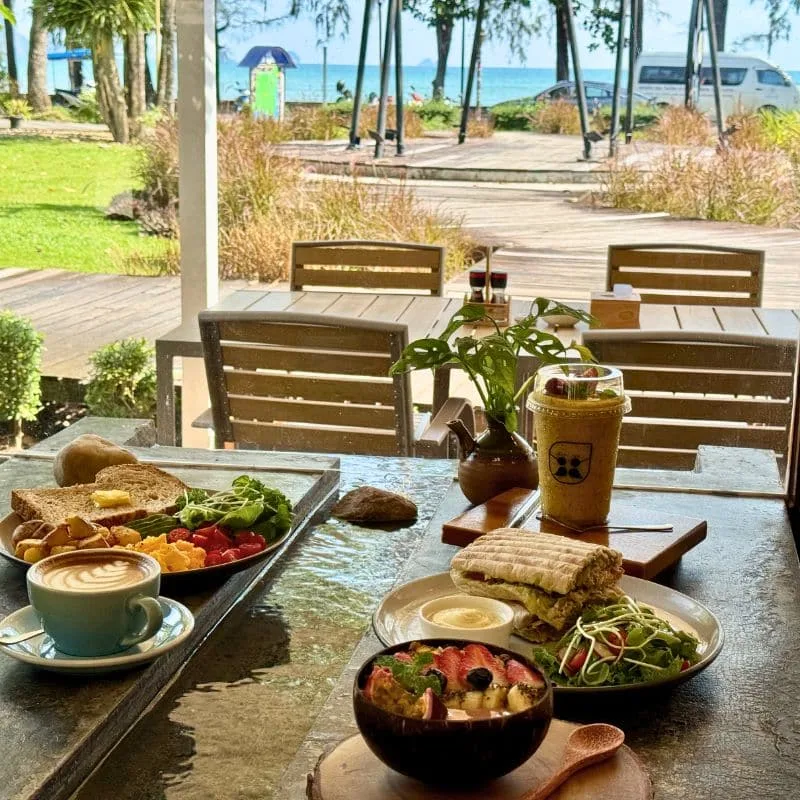
Thai food: local kitchens vs the tourist strip
Every second restaurant on the strip serves pad Thai, green curry and massaman. Many are fine. But there is a real difference between a kitchen cooking for tourists and a kitchen cooking Thai food the way the cooks themselves eat it.
The pattern to look for is simple. Restaurants a street or two back from the beach, with laminated menus in Thai as well as English, plastic chairs and a mostly Thai lunch crowd, will usually cook sharper, spicier and cheaper (80–150 baht a plate) than the beachfront terraces (150–300 baht for the same dish). The small family-run places — bamboo and thatch, a handful of tables, one wok going hard — are where the massaman is worth queueing for; they fill up in high season, so go early or be ready to wait. If you want the real level of heat, say “phet” (spicy); most kitchens tone everything down for visitors by default.
One honest tip: if a place displays photos of fifty dishes from five cuisines, the kitchen is reheating, not cooking. Shorter menus almost always mean fresher food here.
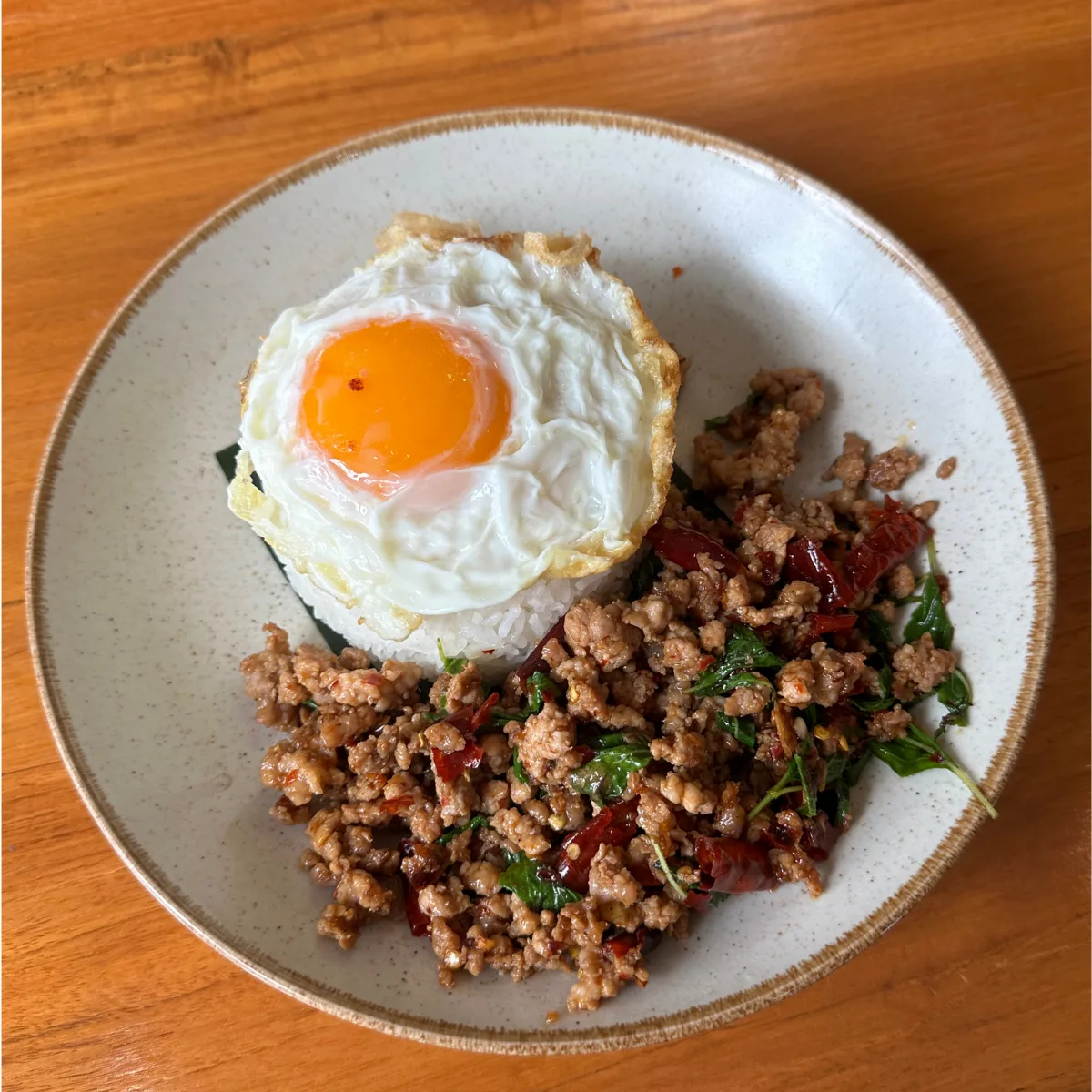
Planning your eating day? Start it at our table — we open at 8:00, five minutes from Nopparat Thara Beach. See the menu · Get directions
Where do locals eat seafood in Ao Nang?
Along Nopparat Thara — seafood is what Ao Nang does best, and the big open-air seafood houses strung along the beach road toward the national park end are where it does it. The best of them are bright, unglamorous halls: live tanks, baskets of prawns and crab, Thai families ordering far too much — and that mix of local and visiting tables is exactly the sign you want. Order steamed prawns with garlic, whole fried fish with fish sauce, and if you see mantis shrimp, get it.
Closer to the strip, a handful of open-air places grill seafood right on the seafront, with nothing between your table and the water. The draw there is barbecued prawns and crab with a proper sunset behind them; they get busy after 18:00, so come early for a front-row table.
Wherever you sit, fish and crab are priced by weight. Ask for the price per kilo and the weight of your fish before it goes to the kitchen — reputable places will tell you without hesitation.
What can you eat at the Ao Nang Landmark Night Market?
Roughly 80–100 stalls of pad Thai fried to order, som tam pounded in front of you, grilled skewers, tom yum, roti with banana and condensed milk, and fresh fruit shakes — most dishes 50–120 baht, and you can eat very well for 200. For sheer variety per baht, nothing in town beats the night market, which fills the Ao Nang Landmark complex across the road from Nopparat Thara Beach every evening. It runs daily from 16:00 to 23:00, but the stalls really get going from 18:00. We wrote a full guide to the night market if you want to plan your plates.
There is also live music, fire shows and Muay Thai bouts at the small stadium, which makes it an easy full evening rather than just dinner.
Sunset drinks and the evening strip
Ao Nang faces west, and the beach bars along the strip make the most of it: happy hours from late afternoon, tables in the sand, and nightly fire shows once darkness falls. You are paying for the location and the spectacle at these places — drinks and mains run resort prices — so our honest advice is to treat them as a sundowner stop and eat your actual dinner at a seafood house or the night market. In the other direction, Nopparat Thara gives you the same sunset for free, from the sand, with a 20-baht fruit shake in hand.
Do not skip dessert
Mango sticky rice is everywhere in high season and you should absolutely have it — ripe mango season peaks roughly March to June, when it is at its best. But Thailand’s dessert tradition goes far deeper than one dish. Our cafe is named after two of the old royal sweets, thongyib and thongyod — small golden egg-yolk desserts traditionally given for good luck — and we make them fresh every day alongside mango sticky rice and the rest of our Thai desserts menu, served with coffee until we close at 18:00. If you try one traditional sweet in Krabi, make it one of the golden ones; there is a reason they have survived four hundred years.
Cheap eats vs splurge: our shortlist
| Budget per person | Where to eat |
|---|---|
| Under 150 baht | Night market stalls at Ao Nang Landmark; morning jok and noodle shops in Khlong Haeng; local kitchens one street back from the beach |
| 150–400 baht | Brunch, smoothie bowls and dessert at Thongyib Thongyod; a modest order at a Nopparat Thara seafood house |
| Splurge (400+) | A full seafood spread priced by weight; a sunset-to-fire-show evening at a beach bar on the strip |
Practical information
- Meal times: Thai kitchens serve all day, but seafood houses are best 17:00–19:00, before tour groups land. The night market peaks 18:30–21:00.
- Seasons: peak season is November–February — arrive early everywhere and expect waits at the popular places. In the rainy season (May–October) you will walk into almost anywhere, and afternoon storms make long lunches a good strategy.
- Prices: street food 50–120 baht, local Thai mains 80–150, tourist-strip mains 150–300, seafood by weight.
- Cash: the night market and most local kitchens are cash-only; ATMs are plentiful on the strip.
- Spice: dishes are toned down by default. Ask for Thai-level spice explicitly if you want it.
Quick answers
Where is the best seafood in Ao Nang? At the open-air seafood houses along Nopparat Thara, especially toward the national park end of the beach. Look for live tanks, pricing by weight and a healthy share of Thai families at the tables — and always confirm the price per kilo before ordering.
How much does eating out in Ao Nang cost? Street food runs 50–120 baht a dish, local Thai kitchens 80–150 a plate, tourist-strip mains 150–300, and seafood is priced by weight at the big houses.
Where should you eat before an island tour? With us — Thongyib Thongyod opens at 8:00 daily at Ao Nang Landmark, and most tour boats leave between 8:30 and 9:00. A smoothie bowl or a sourdough brunch plate sits well on a longtail; a heavy fry-up does not.
How do you avoid tourist-trap restaurants in Ao Nang? Walk one or two streets back from the beach, pick places with short menus and a Thai lunch crowd, and skip anywhere displaying photos of fifty dishes from five cuisines.
However you divide your meals between seafood halls, night market stalls and beach bars, start at least one morning slowly. We are at Ao Nang Landmark near Nopparat Thara Beach, daily from 8:00 to 18:00, with sourdough brunch, golden desserts and a Tom Yum coffee waiting — have a look at the gallery or simply find us.