
Thong Yip, Thong Yod & Foi Thong: Thai Desserts Explained
By the Thongyib Thongyod team · Updated 24 August 2026
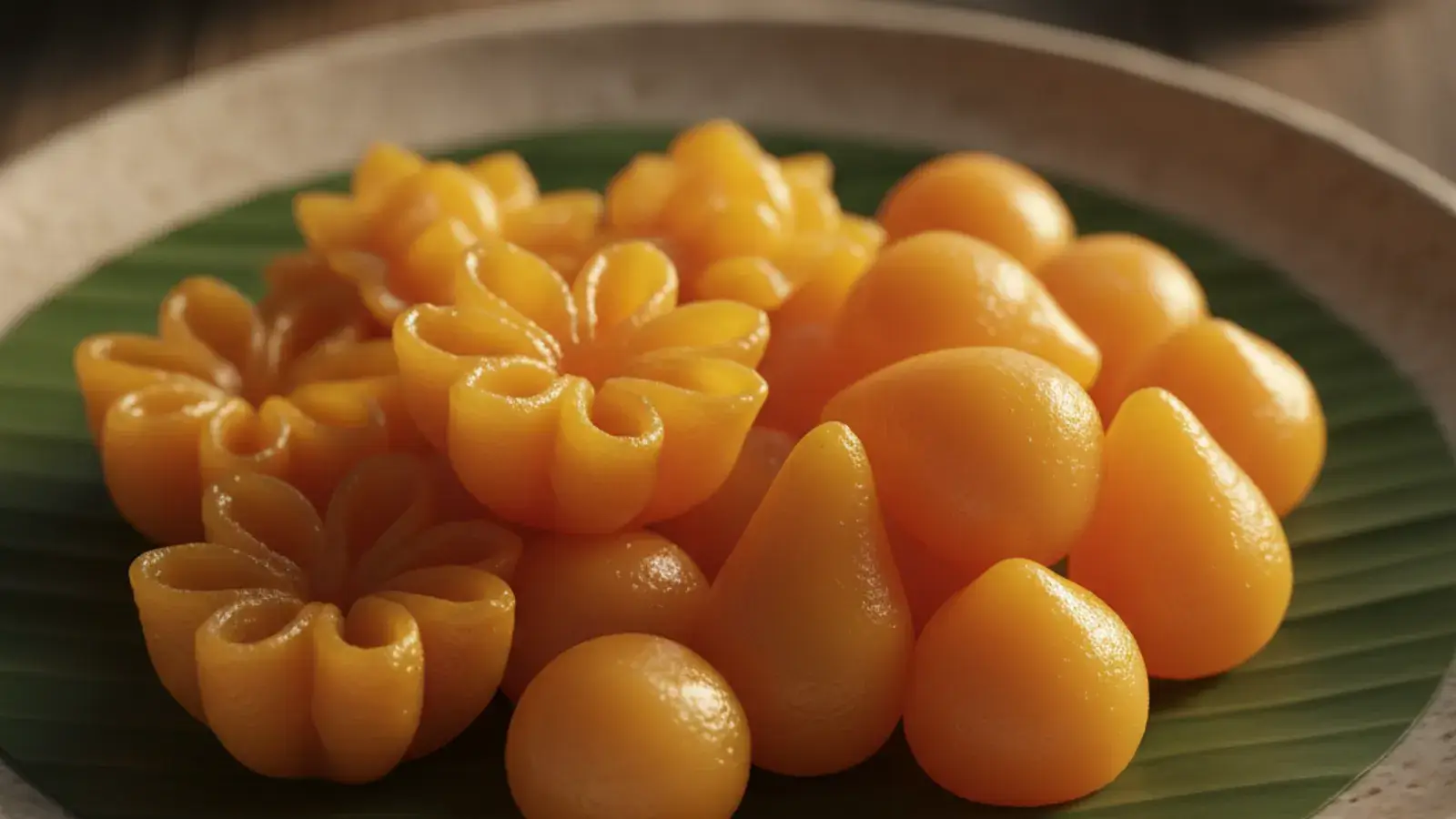
Thong yip, thong yod and foi thong are Thailand’s classic golden desserts: small, intensely golden sweets made from little more than egg yolk and sugar syrup, served at weddings, ordinations and housewarmings for more than three centuries. They look like jewellery, taste like soft caramel-scented custard, and each one is a wish — wealth, prosperity, long life — made edible. At Ao Nang’s markets they cost pocket change, typically 20–60 baht.
In short:
- Thong yip (“pinched gold”), thong yod (“golden drop”) and foi thong (“golden threads”) are made from egg yolk and sugar syrup
- The recipes reached Siam in the 1600s from Portuguese convent kitchens, credited to Maria Guyomar de Pinha — Thao Thong Kip Ma, the “queen of Thai desserts”
- Gold means good fortune: thong yip for wealth, thong yod for prosperity, foi thong for long life and lasting love
- Market sweets around Ao Nang run 20–60 baht — graze and try several
- The golden sweets keep a day or two; mango sticky rice should be eaten on the spot
If you have wondered what our name means, you are not alone — it is one of the questions we hear most often at the counter. These desserts carry one of the best food stories in Thailand: a tale that connects the old royal court of Ayutthaya, a woman of Portuguese-Japanese descent who survived a palace revolution, and the convent kitchens of Portugal. We named our cafe, Thongyib Thongyod, after them because they say something we believe in — that Thai food has always been open to the world, and that the best things happen when traditions meet.
What do thong yip, thong yod and foi thong mean?
All three names contain thong (ทอง), the Thai word for gold: thong yip is “pinched gold”, thong yod is “golden drop”, and foi thong is “golden threads”. Thai dessert names are often tiny poems, and each of these carries its own technique and its own blessing:
| Sweet | Name means | How it is made | Given to wish |
|---|---|---|---|
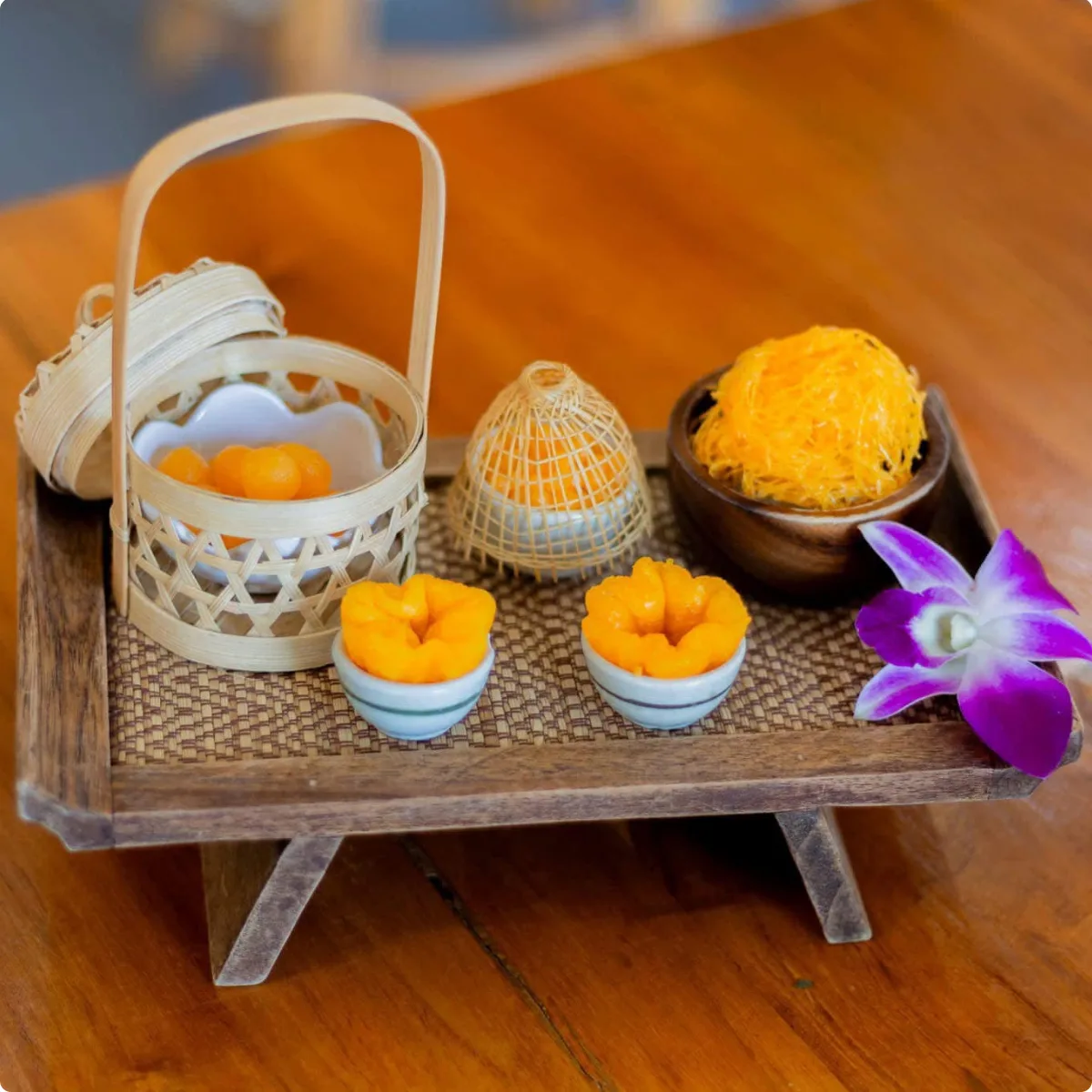
| Thong yip (ทองหยิบ) | “Picked” or “pinched gold” | Beaten yolk poured into hot syrup in thin rounds, each pinched by hand into a small flower and set in a tiny cup | Whatever you touch turns to gold — wealth and success |
| Thong yod (ทองหยอด) | “Golden drop” | Yolk mixed with a little rice flour, dropped into boiling syrup until it sets into a glossy teardrop | Drops of wealth — prosperity that never runs out |
| Foi thong (ฝอยทอง) | “Golden threads” | Yolk streamed through a fine cone into simmering syrup, cooking into a skein of delicate strands | Long, unbroken threads — long life and lasting love, hence its place at nearly every Thai wedding |
Together with sweets like sangkhaya (a coconut-egg custard), these belong to a traditional set often called the nine auspicious Thai desserts, served at ceremonies to convey blessings. Nine is itself a lucky number in Thai — kao sounds like the word for “moving forward”.
The Portuguese-Thai story behind them
Egg yolk and sugar syrup is not an accident of Thai geography — it is a signature of Portuguese convent baking, where nuns used surplus yolks to make sweets such as fios de ovos (“egg threads”) and trouxas de ovos. Those techniques reached Siam in the 1600s, when Ayutthaya was one of the most cosmopolitan trading cities in Asia, with Portuguese, Japanese, Persian, Chinese and French communities living along its rivers.
The person credited with bringing these sweets into the Siamese court is Maria Guyomar de Pinha (1664–1728), a woman born in Ayutthaya to a family of mixed Portuguese, Japanese and Bengali descent. She married Constantine Phaulkon, a Greek adventurer who rose to become one of the most powerful officials under King Narai. Her story then turns dramatic: in the revolution of 1688 Phaulkon was executed, and Maria — despite promises of safe passage — was handed back to the new ruler and condemned to servitude in the royal kitchens.
It was there that her legacy was made. She eventually became head of the royal kitchen, and the Portuguese-style egg sweets associated with her — foi thong, thong yip and their relatives — spread from the palace into Thai life. She is remembered today by her Thai title, Thao Thong Kip Ma, and is sometimes called the “queen of Thai desserts”. Historians debate exactly how many recipes she personally invented, and foi thong and thong yip are the ones most confidently traced to her — but there is no doubt that this Portuguese-Siamese exchange reshaped Thai sweets forever.
We find it a remarkable thought every time we make them: a dessert served at Thai weddings in Krabi today began as a convent recipe from Portugal, carried through the fall of a kingdom by one determined cook.
Want to taste the story? We make thongyib and thongyod fresh every day — we open at 8:00, five minutes from Nopparat Thara Beach. See the menu · Get directions
Why are golden desserts given for good luck?
The colour did most of the work. In Siamese tradition, gold was auspicious — the colour of temples, Buddha images and royalty — so a dessert that gleamed like gold was more than food; it was a wish made edible. That is why you will see trays of these sweets at Thai engagement ceremonies (they are classic items in the groom’s khan mak procession trays), at monk ordinations, at the opening of a new business or house, and at New Year. Giving them is a way of saying: may money flow to you, may your life be long, may everything you touch turn to gold.
How are the golden desserts made?
With difficulty — that is the honest answer, and part of why these sweets were once palace food. The ingredient list is short — egg yolks, sugar, water, a little rice flour for thong yod — but the technique is unforgiving. The yolks are strained until perfectly smooth, and the syrup must be kept at exactly the right density and temperature: too cool and the sweets collapse, too hot and they toughen. Traditional cooks perfume the syrup with jasmine-scented water. Thong yip is the fiddliest of the three, since each flower is pinched into shape by hand, one at a time, while still hot.
The flavour surprises many visitors: rich and custardy rather than eggy, with a dense, silky texture and clean sweetness. They are small for a reason — one or two with a coffee or Thai tea is the right dose. If you have tried Portuguese fios de ovos, or the Japanese sweet keiran somen (which travelled the same route), you will recognise the family resemblance immediately.
Other Thai desserts you will meet in Ao Nang
Khanom (ขนม) is the everyday Thai word for sweets and snacks, and the category is huge. Beyond the golden trio, these are the ones you are most likely to encounter at cafes, restaurants and the Ao Nang Landmark night market:
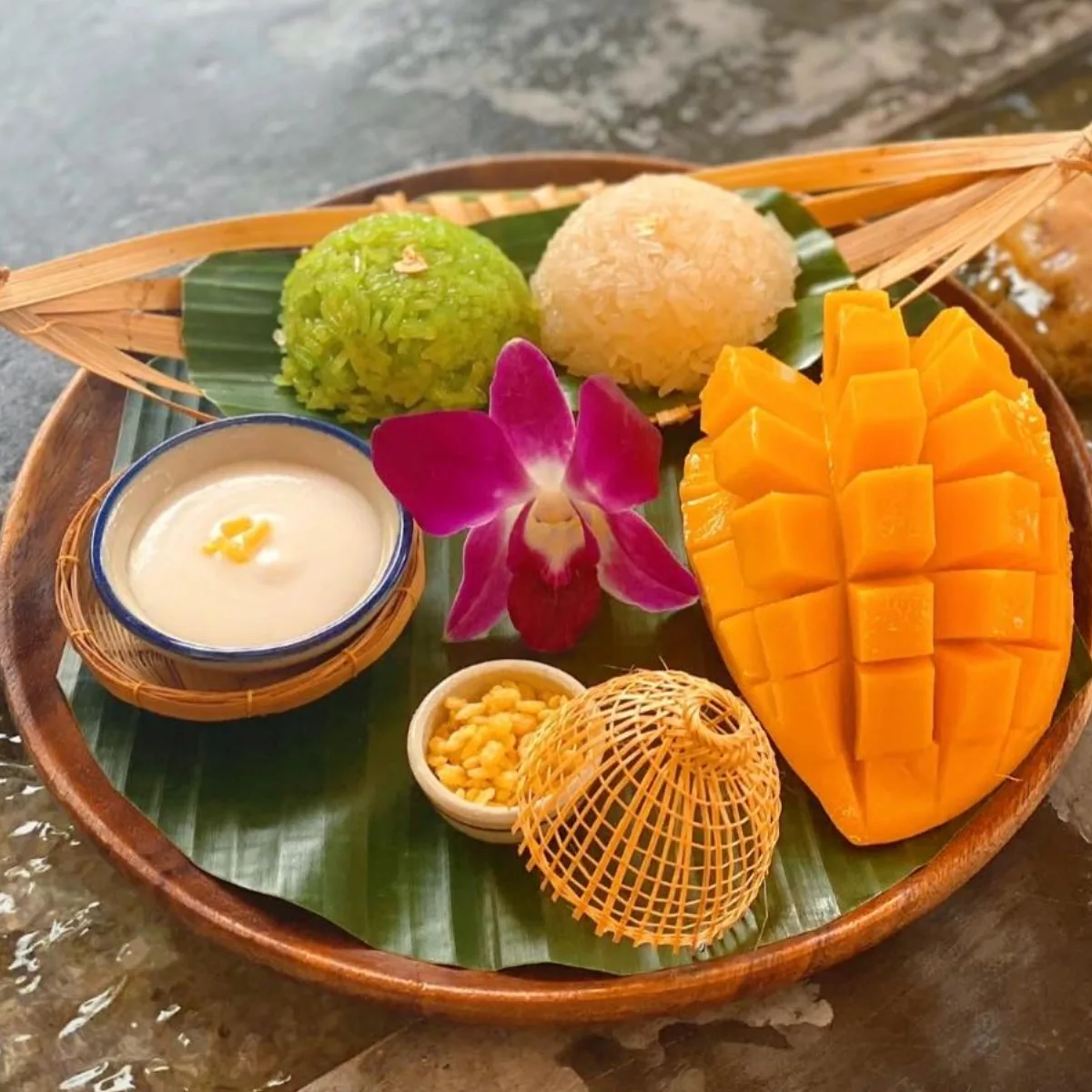
- Mango sticky rice (khao niao mamuang). Ripe mango with coconut-milk sticky rice — the dessert most visitors fall for first, and one we cover in its own mango sticky rice guide. At its very best in Thai mango season, roughly March to June, though good versions are around most of the year.
- Khanom krok. Little coconut-rice pancakes cooked in a dimpled iron pan until crisp outside and molten inside. A classic night-market snack, sold hot by the bag.
- Khanom chan. A nine-layer steamed coconut jelly-cake; the layers symbolise step-by-step advancement in life, so it is another ceremony favourite.
- Tako. Coconut cream over a pandan jelly, set in tiny pandan-leaf cups.
- Sangkhaya. Coconut-egg custard, another sweet with Portuguese roots, sometimes steamed inside a small pumpkin.
- Luk chup. Miniature fruits and vegetables sculpted from mung-bean paste and glazed — almost too pretty to eat.
- Coconut everything. Fresh coconut ice cream served in the shell, grilled coconut cakes, bua loi (rice-flour dumplings in warm coconut milk). On a hot Krabi afternoon, hard to beat.
Most market sweets cost pocket change — typically somewhere between 20 and 60 baht — so the best strategy is to graze and try several.
Practical information for trying them in Ao Nang
- Night markets are the easiest hunting ground. The Ao Nang Landmark night market has rotating dessert vendors, and the Krabi Town weekend market (Saturday and Sunday evenings) has one of the area’s biggest khanom selections.
- Timing matters. Peak season is November to February, when everything is open late; in the rainy season (May to October) some stalls keep shorter hours, so go earlier in the evening.
- Golden desserts keep well. Thong yip, thong yod and foi thong hold up for a day or two, which makes them a good souvenir to carry back to your hotel — unlike mango sticky rice, which should be eaten on the spot.
- At our cafe. Thongyib Thongyod serves its namesake sweets alongside mango sticky rice and the rest of our Thai desserts, daily from 8:00 to 18:00 at Ao Nang Landmark (Sealay Village), about five minutes’ walk from Nopparat Thara Beach — directions on our find us page.
- Pairing tip. Thais take these sweets with something bitter or hot — strong coffee or plain tea — to balance the sweetness. It works.
Quick answers
What is the difference between thong yip and thong yod? Shape and technique: thong yip is poured into syrup in thin rounds and pinched by hand into a small flower, while thong yod is dropped into boiling syrup and sets into a glossy teardrop. Both are egg yolk and sugar syrup; thong yod adds a little rice flour.
What do Thai golden desserts taste like? Rich and custardy rather than eggy, with a dense, silky texture and clean sweetness. They are small on purpose — one or two with a strong coffee or plain tea is the right dose.
Why are golden desserts served at Thai weddings? Their gold colour is auspicious, and each carries a blessing: thong yip for wealth, thong yod for prosperity, foi thong’s unbroken threads for long life and lasting love. They are classic items on a groom’s khan mak procession trays.
How much do Thai desserts cost at the markets? Most khanom cost 20–60 baht a portion around Ao Nang, so trying three or four in an evening is entirely reasonable.
Where can you try thong yip and thong yod in Ao Nang? At our cafe, Thongyib Thongyod, at Ao Nang Landmark — we make our namesake sweets fresh and serve them daily 8:00–18:00, with strong coffee to balance the sweetness. In the evenings, watch for rotating khanom vendors at the night markets.
However you first meet them — on a wedding tray, at a market stall, or in a cafe — the golden desserts are a small edible piece of Thai history. If you would like to taste the sweets we are named after, made the traditional way, come and see us; we will happily tell you the story of Thao Thong Kip Ma over a coffee.