
Thai Iced Coffee, Explained: Oliang, Kafae Yen & Cha Yen
By the Thongyib Thongyod team · Updated 8 July 2026
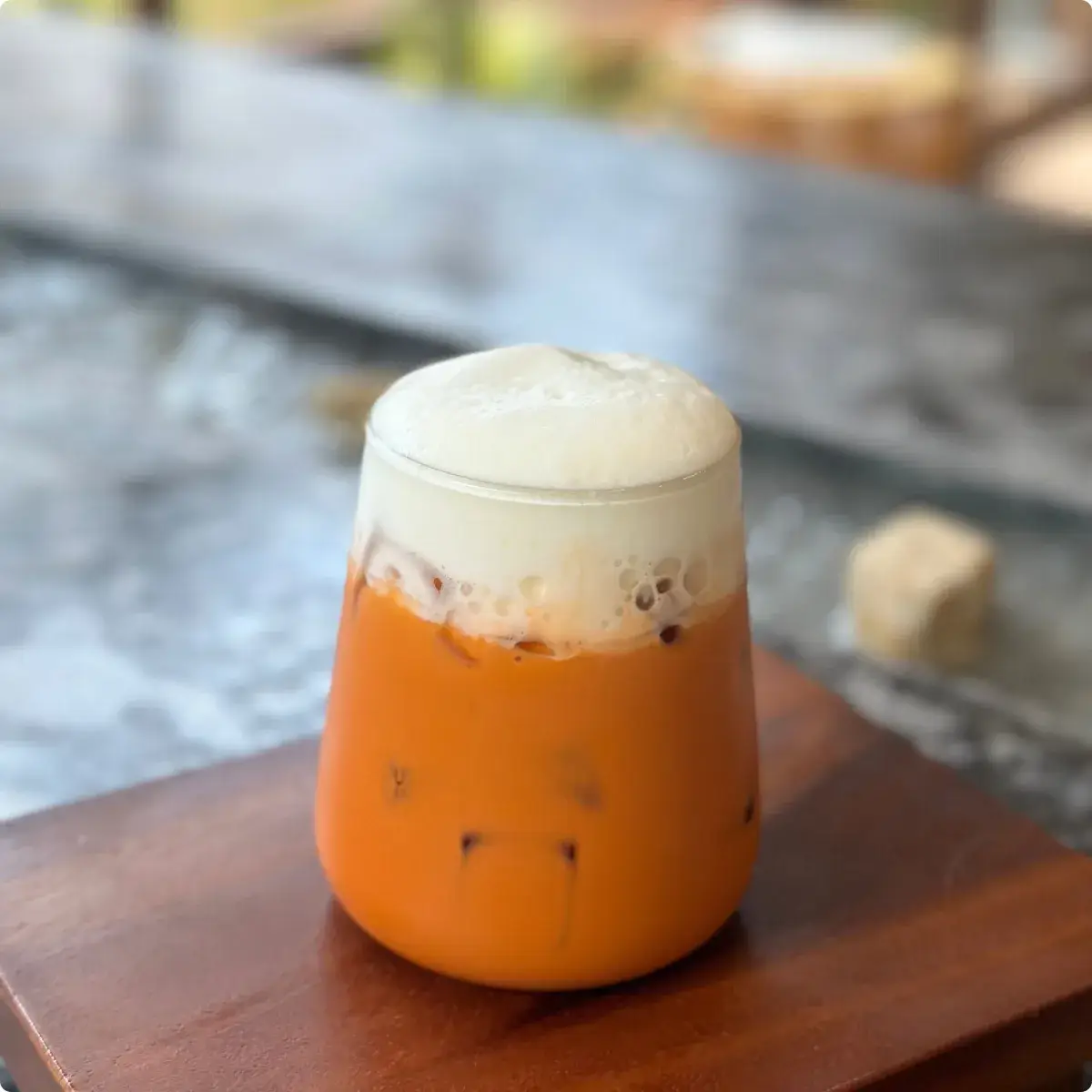
Thai iced coffee is a family of sweet, ice-cold drinks, and the three you will meet most are oliang, kafae yen, and cha yen. Oliang is black iced coffee brewed from Robusta beans roasted with grains, corn, and sesame — no milk, plenty of sugar, and around 80 to 120 mg of caffeine. Kafae yen is that same coffee base loosened with condensed and evaporated milk. Cha yen, the bright-orange one everyone photographs, is not coffee at all: it is strong spiced black tea with the same sweet milk. Knowing which is which saves you from ordering a tea when you wanted a jolt.
In short:
- Oliang = black Thai iced coffee, Robusta roasted with grains/corn/sesame, no milk, ~80–120 mg caffeine
- Kafae yen = oliang base plus condensed and evaporated milk — Thailand’s everyday iced latte
- Cha yen = strong black tea with spices and sweet milk; it is tea, not coffee, despite the “Thai iced” name
- All three are sweet by default; the sugar is built into the recipe, not just added on top
- The traditional pull-and-pour method uses a cloth “sock” filter for a thick, smooth brew
We run Thongyib Thongyod, a specialty-coffee cafe near Nopparat Thara Beach, and “what’s the difference between Thai iced coffee and that orange tea?” is one of the questions we field most across the counter. So here is the plain version — the drinks, how they are made, and how our own menu grew out of the same roots.
What is oliang, the original Thai iced coffee?
Oliang (โอเลี้ยง) is Thailand’s traditional black iced coffee, and it is where the whole family begins. The name comes from the Teochew Chinese words for “black” and “cold,” a nod to the Chinese-Thai coffee shops that made it a national habit. What sets it apart is the roast: rather than pure coffee, the blend traditionally mixes Robusta beans with roasted grains, corn, and sesame seeds, sometimes a little soybean. That mix gives oliang its signature taste — deep, slightly smoky, almost chocolatey, with a body that feels thicker than a Western black coffee.
It is brewed strong, sweetened with sugar while hot, then poured over a tall glass of ice. No milk goes in. Because it leans on Robusta, which naturally carries more caffeine than the Arabica most Western cafes use, a glass lands somewhere around 80 to 120 mg of caffeine — a proper wake-up, disguised by all that sugar. Order it when you want the coffee flavour front and centre and the afternoon heat beaten back.
What’s the difference between Thai iced coffee and Thai iced tea?
The base ingredient — one is coffee, the other is tea. This is the single most common mix-up we see, and it is an easy one to make, because both arrive tall, iced, wildly sweet, and crowned with a swirl of milk. But kafae yen is built on oliang’s coffee base, while cha yen (ชาเย็น), the famous orange “Thai iced tea,” is built on strong black tea steeped with spices and, in many recipes, a little food colouring that gives it that unmistakable sunset hue. Cha yen contains no coffee at all. If someone hands you a bright-orange glass expecting caffeine like a coffee, they will be gently disappointed — tea carries less.
Here is the whole family side by side.
| Drink | Base | Milk | Sweetness | Caffeine |
|---|---|---|---|---|
| Oliang (โอเลี้ยง) | Robusta roasted with grains, corn, sesame | None | Sweet — sugar in the brew | ~80–120 mg |
| Kafae yen (กาแฟเย็น) | Same oliang coffee base | Condensed + evaporated | Very sweet | ~80–120 mg |
| Cha yen (ชาเย็น) | Strong black tea with spices | Condensed + evaporated | Very sweet | Tea-level, lower than coffee |
Kafae yen (กาแฟเย็น) sits in the middle: take oliang, add condensed milk for sweetness and evaporated milk for body, pour over ice, and you have Thailand’s everyday iced coffee. It is rich, creamy, and sweeter than almost any Western equivalent — closer to a coffee dessert than a morning flat white. If you love it but find it too sugary, the standard move is to ask for “wan noi” (หวานน้อย), less sweet, which most shops will happily do.
Planning a slow Ao Nang morning? Start it at our table — we open at 8:00, five minutes from Nopparat Thara Beach. See the menu · Get directions
How is traditional Thai iced coffee made?
With a cloth “sock” filter and a practised pull-and-pour. The old-school method uses a long cotton or muslin bag stretched over a metal ring — the “sock” — into which the ground coffee goes. Near-boiling water is poured through, the brew is caught in a pot, and often it is poured back through the grounds a second time to build strength and body. The cloth traps the finest particles while letting the oils through, which is what gives oliang and kafae yen their smooth, heavy texture without the grit of an unfiltered brew.
You will still see this done by hand at markets and old coffee stalls across Thailand, the vendor lifting the pot high to aerate the pour. It is unhurried, tactile, and a small piece of theatre worth watching if you get the chance. At a modern specialty cafe like ours the equipment is different — we pull espresso and brew filter and cold brew on machines built for consistency — but the instinct is the same one that drives the sock-pour: coax the most flavour out of the bean and treat the drink like it matters.
Where can you try Thai coffee in Ao Nang?
At Thongyib Thongyod, five minutes from Nopparat Thara Beach and open from 8:00. We came up as a tiny cafe during the quiet pandemic years — twin sisters from Isan, building recipes with time we suddenly had — and cold coffee culture is in the bones of the place. You can drink it classic and cold here, but the reason people remember our counter is the signatures we developed in those slow seasons, all of which start from the same Thai love of a bold, characterful iced coffee and then wander somewhere unexpected:
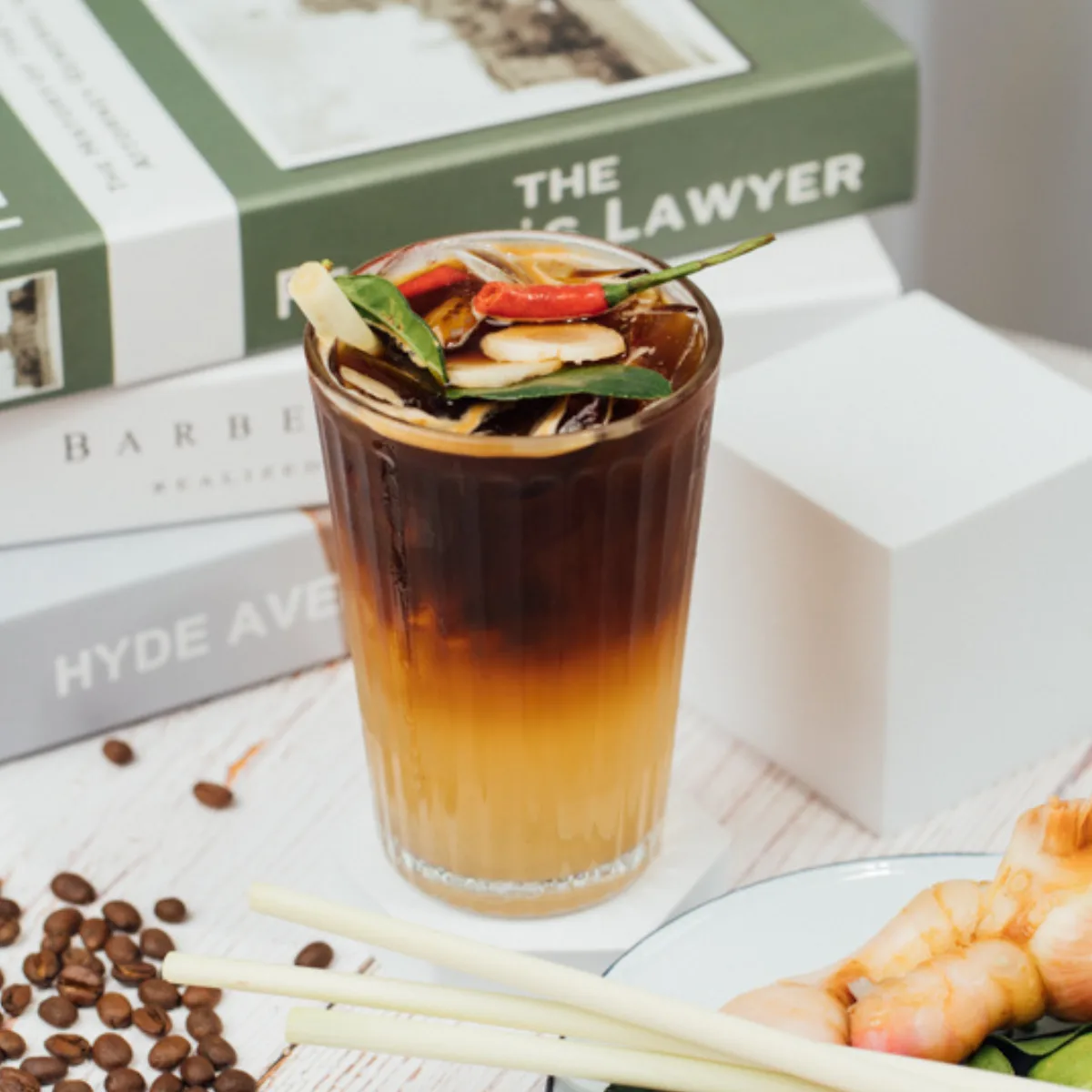
- Tom Yum Coffee — our most talked-about pour, a cold coffee that flirts with the aromatics of Thailand’s famous soup. Reviewers call it “such a unique flavour,” and it is the one to order if you want a story to take home.
- Yuzu Espresso — espresso lifted with bright, citrusy yuzu; sharp, clean, and made for a hot day.
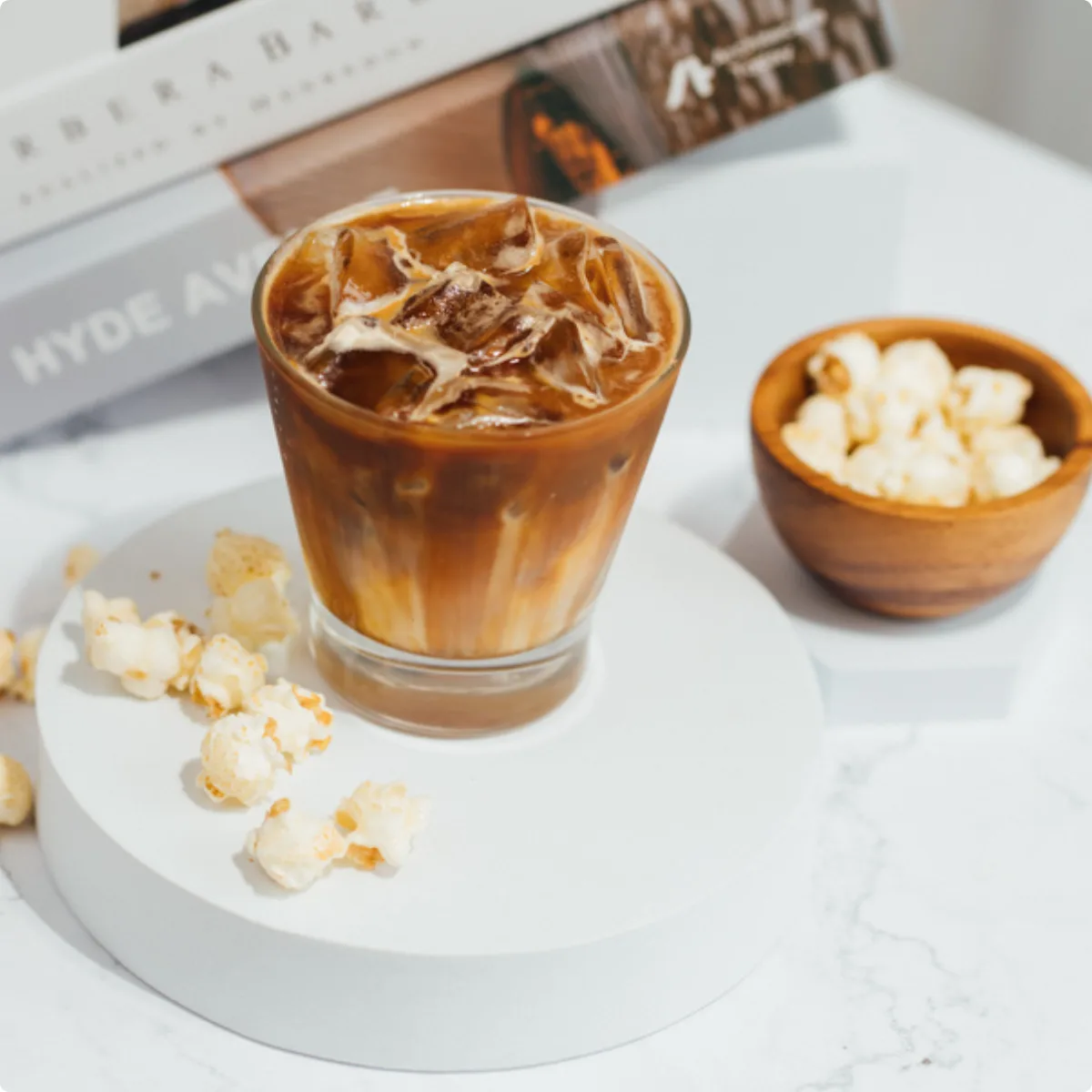
- Popcorn Caramel, our “Popular Coffee” — sweet, buttery, and unapologetically fun.
- Coco Flower and Secret No.9 — two more house creations for the curious; the second keeps its recipe close, as the name suggests.
None of these replaces a good oliang; they are the next chapter of the same book. If your tastes run greener, our companion guide to what matcha is and how to order it covers the other side of our cold-drinks board, and the full coffee menu in Ao Nang lays out everything we pour. Come thirsty and we will steer you.
Practical information
- Ordering by name: Ask for “oliang” for black iced coffee, “kafae yen” for iced coffee with milk, and “cha yen” for the orange iced tea. Say “wan noi” if you want it less sweet.
- Sweetness: All three are sweet by design. The sugar and condensed milk are part of the recipe, not an afterthought — worth knowing before your first sip.
- Caffeine: Oliang and kafae yen run about 80–120 mg per glass thanks to the Robusta base; cha yen, being tea, carries noticeably less.
- Dairy-free: Traditional kafae yen and cha yen rely on condensed and evaporated milk, so they are not dairy-free by default. At our cafe, ask and we will talk options.
- Where to find us: Thongyib Thongyod, Ao Nang Landmark, Khlong Haeng — open daily 8:00 to 18:00. Details on our find-us page.
Quick answers
What is oliang? Traditional Thai black iced coffee, brewed from Robusta roasted with grains, corn, and sesame, sweetened with sugar and served over ice with no milk. Roughly 80 to 120 mg of caffeine per glass.
What’s the difference between Thai iced coffee and Thai iced tea? Kafae yen starts from a coffee base; cha yen starts from spiced black tea. Both get condensed and evaporated milk, but one is coffee and the other is tea — the orange colour marks the tea.
What is kafae yen? Oliang with milk — the same sweet Robusta coffee base softened with condensed and evaporated milk over ice. Thailand’s everyday iced latte, and one of the sweetest coffees around.
Is Thai iced coffee stronger than regular coffee? It punches hard for its size because it is built on high-caffeine Robusta, usually 80 to 120 mg per glass. The sugar and milk hide the strength, so it tastes gentler than it works.
Where can you try Thai coffee in Ao Nang? At Thongyib Thongyod, open from 8:00 near Nopparat Thara Beach — classic cold coffee alongside our own Tom Yum Coffee, Yuzu Espresso, Popcorn Caramel, Coco Flower, and Secret No.9.
Whether you take yours black as oliang or sweet and milky as kafae yen, iced coffee is one of the easiest, happiest ways into Thai food culture — no reservation, no fuss, just a cold glass in the heat. We would love to pour you one. Find us at Ao Nang Landmark from 8:00, browse the menu first if you like, and we will meet you at the pond-side table with the ice already clinking.