
Mango Sticky Rice in Ao Nang: The Khao Niao Mamuang Guide
By the Thongyib Thongyod team · Updated 8 July 2026
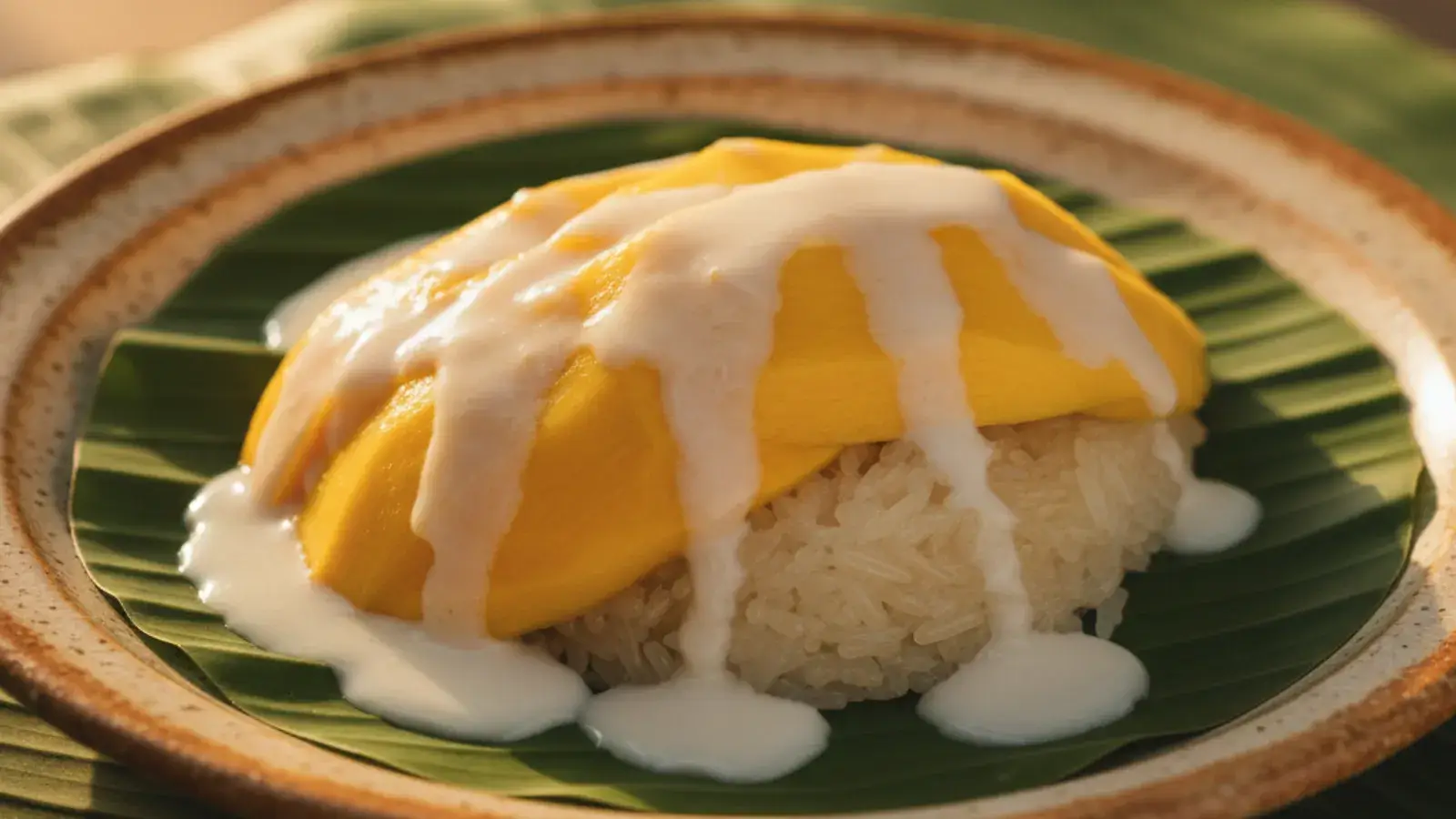
Mango sticky rice — khao niao mamuang (ข้าวเหนียวมะม่วง) — is warm glutinous rice soaked in sweetened coconut cream, served beside slices of ripe mango with a spoonful of thicker, salted coconut cream over the top. The classic mango is nam dok mai, the season peaks March to June, and the dish is naturally vegan and gluten-free. Three main ingredients, no oven, no tricks — which is exactly why it is so easy to get wrong.
In short:
- Khao niao mamuang = steamed sticky rice folded with coconut cream, sugar and salt, plus ripe mango and salted coconut cream on top
- Mango season peaks March–June, with April and May the sweet spot for nam dok mai — but careful kitchens serve good versions year-round
- The topping must taste noticeably salty — unsalted coconut milk is the most common failure
- Naturally vegan and gluten-free: glutinous rice contains no gluten, and the classic recipe has no dairy or egg
- In Ao Nang, look for it at the beachfront fruit stalls and the Landmark night market in the evenings
Cold, hard rice, coconut milk from a carton with no salt, or a mango picked too early can turn Thailand’s most famous dessert into a disappointment — and plenty of tourist-strip versions do exactly that. Once you know what each component should taste like, you will never settle for a bad plate again.
Mango sticky rice is our signature dessert at Thongyib Thongyod Brunch & Cafe, so we make it every single day and we have strong opinions about it. Here is what each part should taste like — and how to find a good plate in Ao Nang.
What is khao niao mamuang?
Khao niao mamuang comes from the Thai tradition of pairing sticky rice with seasonal fruit. Sticky rice — also called glutinous rice — is a staple in northern and northeastern Thailand, usually eaten with savoury food. But when mangoes ripen in the hot season, the rice switches sides: it is steamed, then folded with warm coconut cream, sugar and salt while it can still absorb them, and served with the sweetest mangoes of the year.
The finished plate has three layers of flavour working together:
- The mango brings floral sweetness and gentle acidity
- The rice brings warmth, chew and the richness of coconut
- The salted coconut cream on top ties them together — the salt is not a mistake, it is the whole point
A proper serving is usually finished with a scatter of crisp toasted mung beans or sesame seeds for crunch. That is the entire dish. Everything depends on execution.
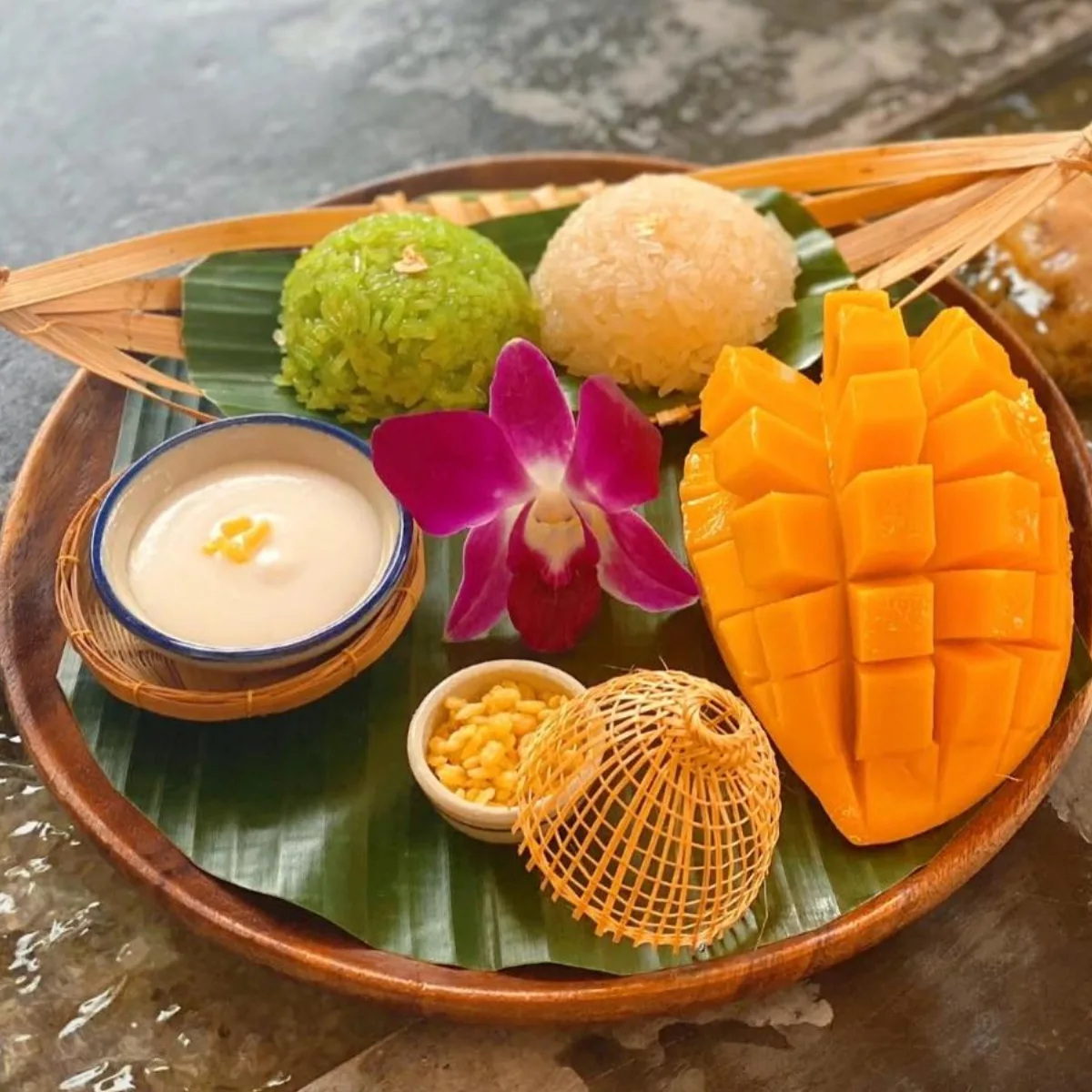
The three components, done right
The sticky rice
Real khao niao mamuang starts with Thai glutinous rice, a completely different grain from jasmine rice. It is soaked for several hours, then steamed — traditionally in a bamboo basket over a pot — until the grains are translucent, chewy and distinct.
The crucial step happens right after steaming: the hot rice is folded with a warm mixture of coconut cream, sugar and salt, then left to rest so every grain drinks it in. Do this while the rice is hot and you get glossy, fragrant, tender rice; do it late, or refrigerate the result, and the rice turns hard and grainy. This is why the best versions are made in small batches through the day rather than scooped from a cold tray. Some cooks steam the rice with pandan leaves for extra aroma, and you will occasionally see festive versions tinted blue with butterfly pea flower — pretty, and perfectly traditional.
The coconut cream — and why it must be salted
The topping sauce is coconut cream gently warmed with a good pinch of salt, sometimes thickened slightly with rice flour so it coats the mango. Taste it on its own and it should be rich, barely sweet and noticeably salty.
If that sounds odd, trust the Thai palate: salt sharpens the mango’s sweetness and stops the dish from becoming one-note sugary. Sweet-and-salty coconut is a signature of Thai desserts generally — you will find the same balance in many of the traditional sweets we cover in our guide to Thai desserts. A version made with unsalted coconut milk is the most common failure you will meet, and once you notice it you cannot un-notice it.
The mango: nam dok mai and ok rong
Not any mango will do. Thailand grows dozens of varieties, but two are the classic partners for sticky rice:
| Variety | Flavour | Texture | Notes |
|---|---|---|---|
| Nam dok mai (น้ำดอกไม้, “flower nectar”) | Honey-sweet with a floral perfume | Silky, almost fibre-free | The elegant, elongated golden mango Thailand is famous for — the variety we use |
| Ok rong (อกร่อง) | Intensely sweet and aromatic | A little more fibrous | An older, smaller variety many Thais consider the traditional choice |
Either way, the mango must be fully tree-ripened — deep yellow, fragrant at the stem and yielding to a gentle press. A green-tinged, crunchy or sour mango belongs in a spicy Thai salad, not on sticky rice.
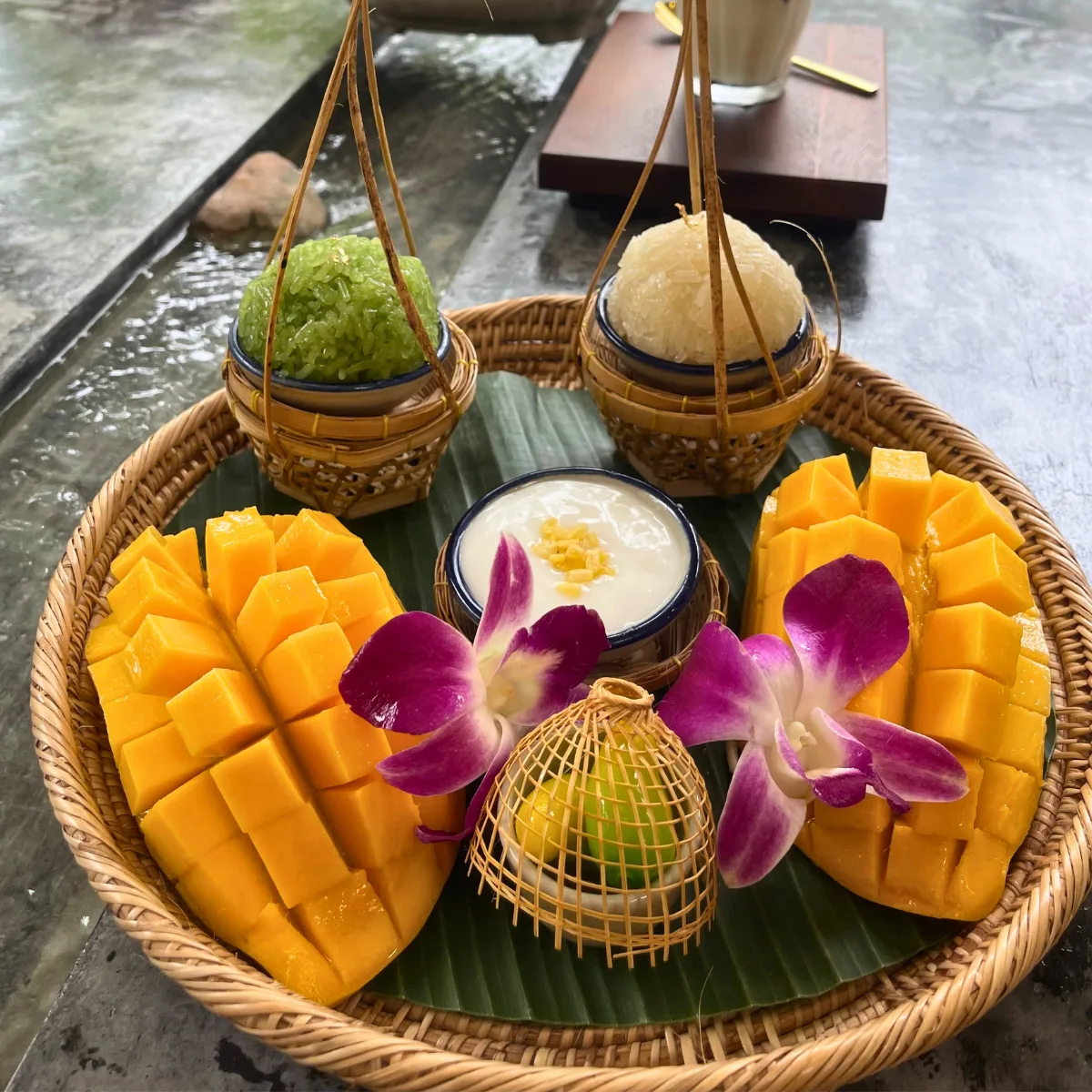
Craving a plate already? Start with ours, made fresh every morning — we open at 8:00, five minutes from Nopparat Thara Beach. See the menu · Get directions
How a dessert conquered Coachella
Khao niao mamuang has been beloved in Thailand for generations — a hot-season ritual, a market-stall staple, the dessert families buy by the kilogram when the first good mangoes arrive. But its global moment came on one specific night.
In April 2022, the rapper Danupha “Milli” Khanatheerakul became the first Thai artist to perform solo at Coachella. She closed her set with a song called “Mango Sticky Rice” — and then ate a bowl of khao niao mamuang on stage in front of the festival crowd. The clip went viral worldwide: Google searches for the dessert reportedly jumped as much as twentyfold, hashtags for the dish trended in Thailand and beyond, and vendors back home saw sales double and triple within days. There was even public discussion of nominating the dish for UNESCO cultural-heritage recognition.
For many Thais the moment landed emotionally as well: a young artist choosing a humble, homey dessert — not a palace dish — to represent the country on a world stage. If you arrived in Thailand already knowing this dessert’s name, you probably have Milli to thank.
When is mango season in Thailand?
Mangoes in Thailand peak from roughly March to June, with April and May the sweet spot for nam dok mai. This is Thailand’s hot season, when markets overflow with golden fruit and khao niao mamuang is everywhere — it is genuinely a seasonal celebration, the Thai equivalent of strawberry season.
So what does it mean when a place serves it year-round? Thankfully, not fakery: nam dok mai trees are cultivated across Thailand and growers use staggered, off-season techniques, so good fruit is available in every month — it simply takes more care to source. Outside the peak, quality varies more from mango to mango, so a kitchen that serves the dish daily has to buy carefully, ripen fruit properly and reject anything sour or fibrous rather than serving it anyway. If you visit Ao Nang in the high season (November to February) or the rainy months (May to October), you can still eat excellent mango sticky rice — you just want it from somewhere that treats the mango as the star, not a garnish. We know this discipline first-hand: because we serve khao niao mamuang every day at Thongyib Thongyod, buying, ripening and rejecting mangoes is a daily job for us, not a seasonal one.
How to eat it
There is no wrong way, but there is a best way:
- Eat it fresh and warm-ish. The rice should be at room temperature or gently warm — never fridge-cold, which makes it hard.
- Build each spoonful. A bit of rice, a piece of mango, dragged through the salted cream. All three elements in one bite is the intended experience.
- Don’t skip the topping. The crispy mung beans or sesame are there for texture against all that softness.
- Timing: Thais eat it as an afternoon treat or after a meal, but nobody will blink if you have it at 9 in the morning. We would argue mango sticky rice with a good coffee is one of life’s better breakfasts.
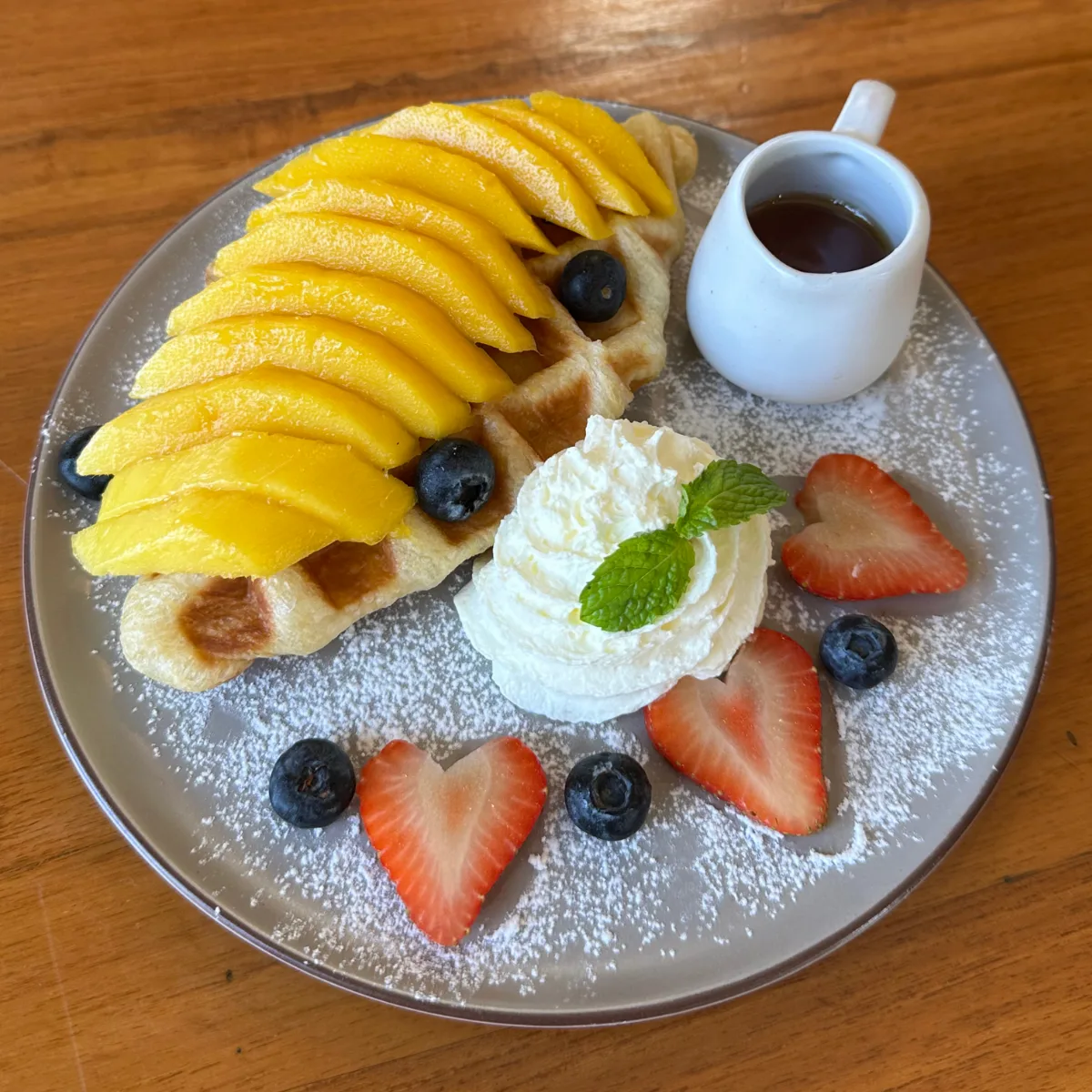
Is mango sticky rice vegan and gluten-free?
Yes, on both counts — and naturally so, not by adaptation. Traditional khao niao mamuang contains only rice, coconut cream, sugar, salt and mango. Despite the confusing name, glutinous rice contains no gluten (“glutinous” just describes its glue-like stickiness), so the dish is safe for coeliacs, and there is no dairy or egg anywhere in the classic recipe. If you have serious allergies, just confirm the topping — the crispy element should be mung beans or sesame, and reputable places will tell you exactly what they use.
Where can you eat mango sticky rice in Ao Nang?
Ao Nang makes it easy to find the dish: fruit stalls and dessert vendors appear along the beachfront strip and at the Ao Nang Landmark night market in the evenings, and most Thai restaurants list it in season. Street versions typically come in a takeaway box; quality follows the mango, so peak season (March–June) is the safest bet for stall-bought portions.
At Thongyib Thongyod Brunch & Cafe it is our signature dessert, made fresh daily with nam dok mai mango and properly salted coconut cream, and served all day, every day:
- Personal portion: 159฿ — one ripe mango’s worth, ideal after brunch
- Family set: 199฿ — a larger sharing plate for two or three
- Hours: daily 8:00–18:00, at Ao Nang Landmark (Sealay Village) in Khlong Haeng, about a 5-minute walk from Nopparat Thara Beach — directions on our find us page
- Naturally vegan and gluten-free, like the traditional recipe
Quick answers
When is the best time to eat mango sticky rice in Thailand? March to June, when mangoes are in peak season — April and May are the sweet spot for nam dok mai. Careful kitchens serve good versions year-round using staggered-harvest fruit.
Which mango is used for mango sticky rice? Nam dok mai (“flower nectar”) or the older ok rong variety, always fully tree-ripened — deep yellow, fragrant at the stem, yielding to a gentle press.
Why is the coconut cream on top salty? The salt sharpens the mango’s sweetness and keeps the dish from becoming one-note sugary. A topping made from unsalted coconut milk is the most common failure in tourist-strip versions.
Why is mango sticky rice so famous? It has been a Thai hot-season ritual for generations, but its global moment came in April 2022, when the rapper Milli ate a bowl on stage at Coachella — searches for the dessert reportedly jumped as much as twentyfold.
Where can you eat mango sticky rice in Ao Nang every day? At Thongyib Thongyod Brunch & Cafe, inside Ao Nang Landmark — it is our signature dessert, made fresh daily with nam dok mai mango and served all day: 159฿ for a personal portion, 199฿ for a family set, from 8:00 to 18:00.
Whether you try it from a night-market stall or at a cafe table, make khao niao mamuang a non-negotiable on your Krabi eating list. And if you want to taste the version we make every morning — alongside the golden desserts we are named after — come find us near Nopparat Thara and let us show you why this dish earned its fame.