
Healthy Breakfast in Ao Nang: Smoothie Bowls, Juices & More
By the Thongyib Thongyod team · Updated 8 July 2026
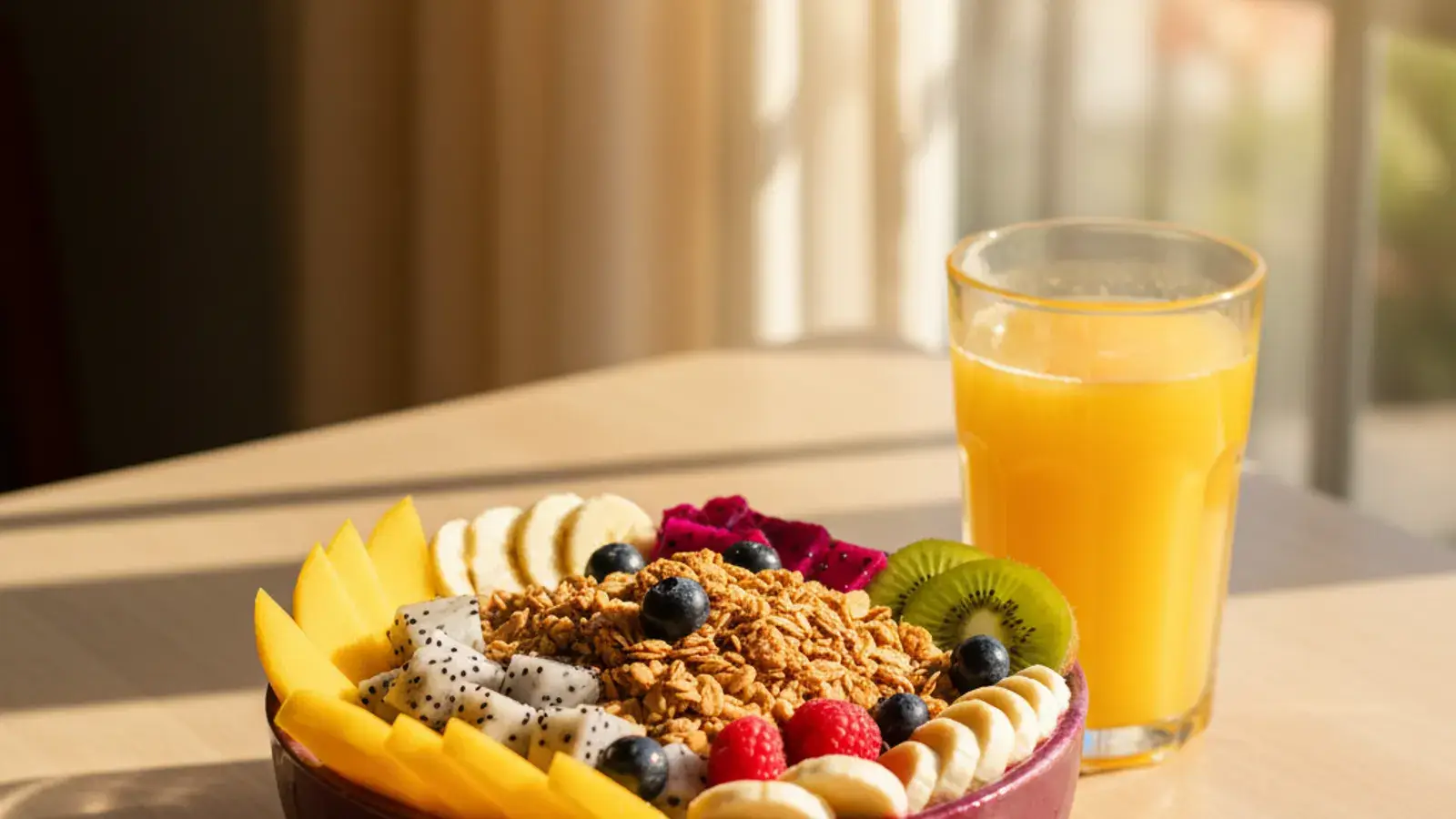
A healthy breakfast in Ao Nang costs less than you might guess: smoothie bowls run 180–280฿, cold-pressed juices 100–180฿, eggs on sourdough 150–300฿, and a fresh coconut 40–60฿. The fruit — mango, pineapple, passion fruit, dragonfruit — grows in the provinces around Krabi and reaches the market within days of picking, so a fruit-forward breakfast here is better and cheaper than in Stockholm, Berlin or Melbourne. Two rules make it work: add a protein source, and eat by 7:30–8:00 if a boat is picking you up.
Those rules matter because Ao Nang mornings ask a lot of you. Longtail boats to the 4 Islands leave from the beach by 9:00, climbers head for the limestone at Railay before the rock gets hot, and even a lazy day means real walking between Nopparat Thara Beach and the far end of the strip. Start that on an oily street-cart breakfast or a hotel buffet of white toast and you will feel it by 11:00.
In short:
- Expect 180–280฿ for a smoothie bowl, 100–180฿ for cold-pressed juice, 150–300฿ for eggs on sourdough, 40–60฿ for a fresh coconut.
- A good bowl is blended from frozen fruit — no ice, no syrup — on an açaí or local dragonfruit base.
- Add protein: two eggs bring roughly 12 g. Fruit and granola alone is a snack, not a breakfast.
- Island-tour pickups run 8:00–9:00, so eat by 7:30–8:00 — and check your cafe opens early enough.
- Ice in established cafes is factory-made from treated water; fruit you peel yourself is always safe.
Why is Thailand ideal for a fruit-forward breakfast?
Because the fruit barely travels. In most of Europe, a mango has spent a week or two in a shipping container before it reaches your bowl; in Krabi, the fruit at the morning markets was often on the tree that same week. That difference is not just romantic — riper fruit picked closer to home simply tastes better and holds more of its vitamin content.
A few local stars worth knowing:
- Mango (ma-muang): Thai varieties like nam dok mai are honey-sweet and fiberless. Peak season is roughly March to June, but decent mangoes are around most of the year.
- Pineapple (sapparot): Small, intensely sweet local pineapples bear little resemblance to the acidic supermarket kind back home.
- Passion fruit (saowarot): Tart, fragrant, and loaded with vitamin C — a small amount lifts an entire bowl.
- Dragonfruit (kaew mangkon): Mild on its own, but the magenta-fleshed variety is rich in antioxidants and turns any smoothie a spectacular pink.
- Banana and coconut: The everyday workhorses — potassium, healthy fats, and natural creaminess without dairy.
Eating fruit-forward in Thailand is not a compromise or a trend. It is simply eating what the region does best.
What makes a good smoothie bowl?
Three things: a base blended from frozen fruit (never fruit plus ice or syrup), toppings that add texture and staying power, and something functional to balance the sweetness. A smoothie bowl is, at its core, a very thick smoothie eaten with a spoon — here is what separates a great one from a disappointing one.
The base
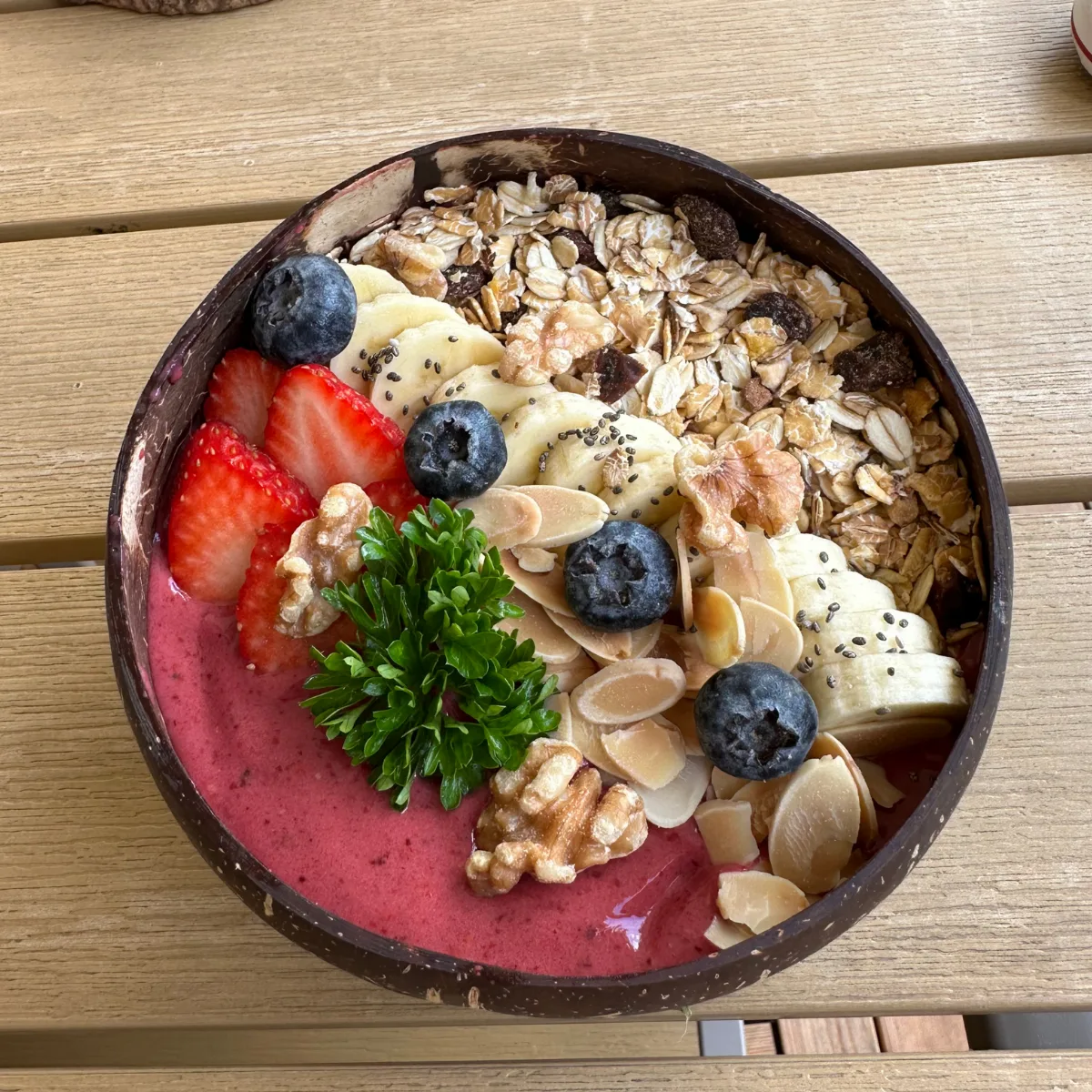
The base should be blended from frozen fruit — not fruit plus ice, which waters everything down, and not fruit plus sugary syrup. Açaí, the deep-purple Amazonian berry, is the classic base because of its antioxidant load and its tart, almost chocolatey flavor; in Thailand it arrives as frozen pulp, so anywhere serving real açaí is making a deliberate quality choice. Dragonfruit (often labeled pitaya) is the local alternative: lighter in flavor, just as photogenic, and grown much closer to Ao Nang.
The toppings
Good toppings add texture and staying power: granola for crunch, fresh mango or pineapple for brightness, banana coins, coconut flakes, chia or pumpkin seeds for protein and omega-3s. A drizzle of honey or peanut butter is fine; a mountain of chocolate cereal defeats the purpose.
The balance
The best bowls balance sweet fruit with something functional — Greek yogurt for protein, spirulina for minerals, a squeeze of lime to cut the sweetness. If a bowl is pure sugar, you will crash an hour later on the boat.
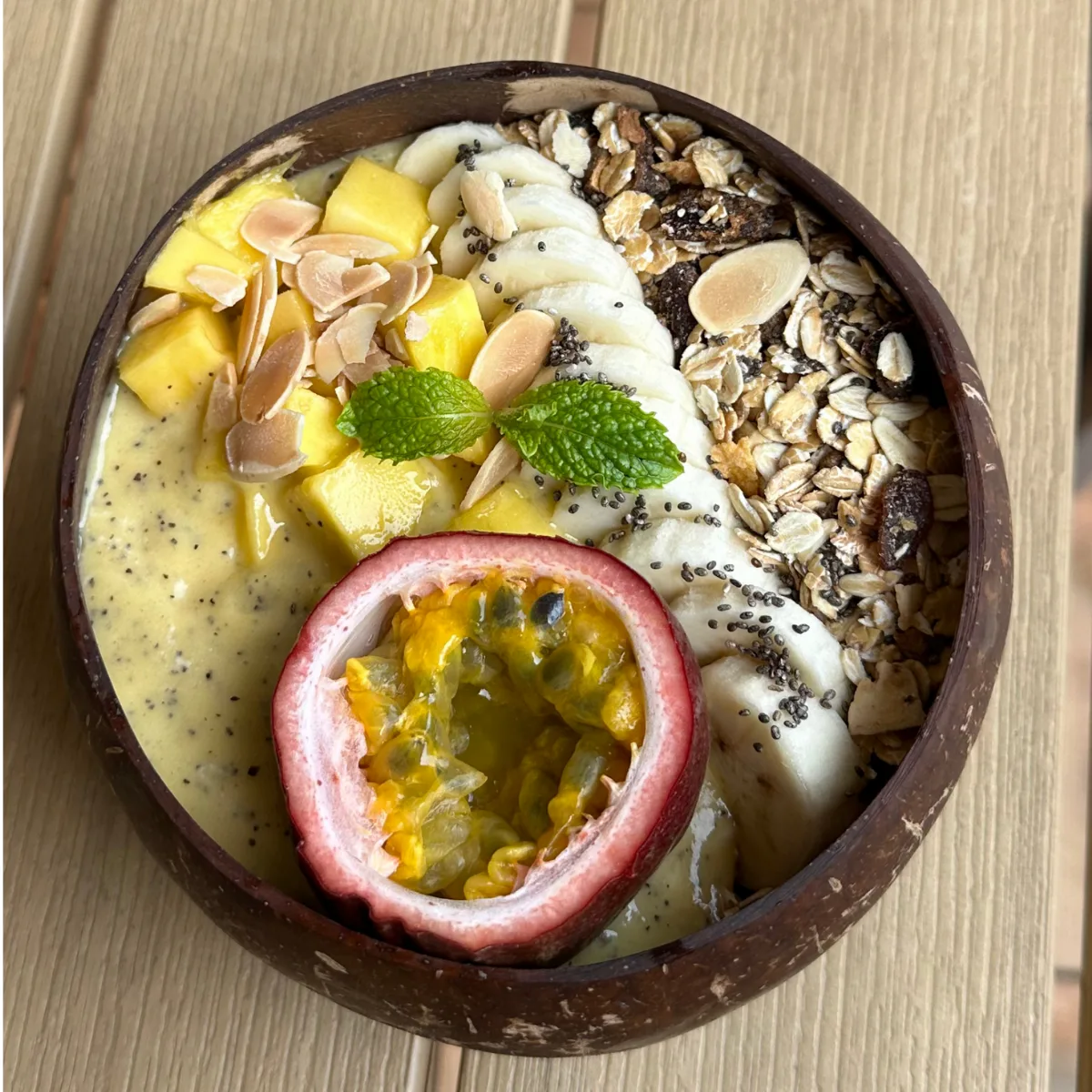
At our cafe we build four smoothie bowls around exactly these principles: Berry Bliss Açaí (239฿) on a real açaí base, Tropical Paradise (229฿) with local mango and pineapple, Sunshine Citrus (219฿) for something lighter and tangier, and Coco Bliss (239฿), a coconut bowl boosted with spirulina. All sit in the 219–239฿ range, which is typical for a properly made bowl in Ao Nang — noticeably more than street fruit, noticeably less than a resort breakfast.
Is cold-pressed juice worth the extra baht?
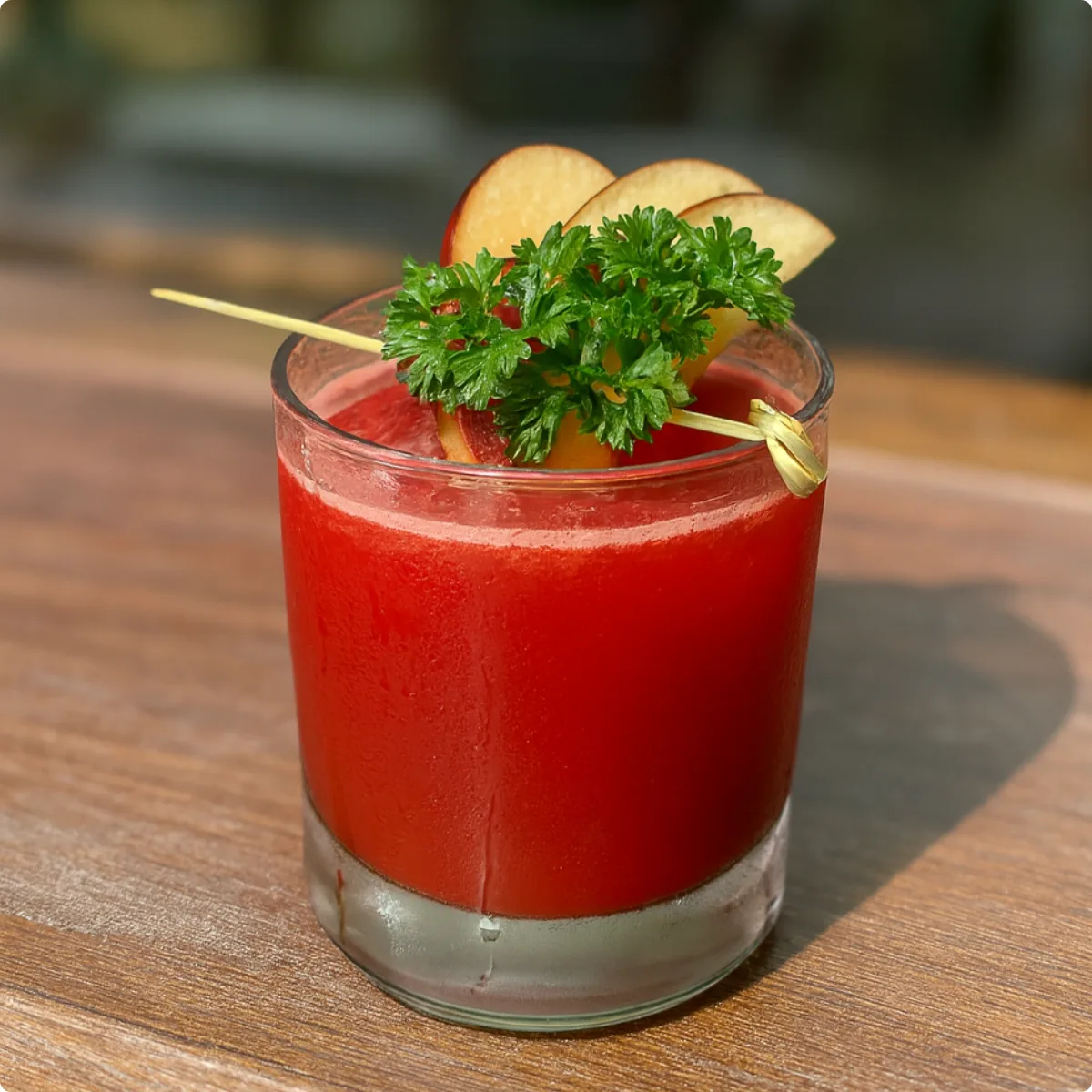
For breakfast, yes. You will see two kinds of juice in Ao Nang: street stands blend fruit with ice and, very often, sugar syrup — refreshing, cheap, and fine as an afternoon treat. Cold-pressed juice is different: the fruit is crushed and pressed rather than blended with a heat-generating blade, no water or syrup is added, and you get a denser, more nutrient-complete drink.
The combinations that work hardest pair fruit with vegetables or ginger — the classic orange-carrot-ginger, or greens with pineapple to make them drinkable. One honest rule, wherever you buy: pick a juice with vegetables in it at least every other day, and treat pure fruit juice as dessert in a glass.
One practical note: real cold-pressed juice separates slightly in the glass. That is a good sign, not a flaw.
Planning tomorrow’s breakfast? Start it at our table — we open at 8:00, five minutes from Nopparat Thara Beach. See the menu · Get directions
Sourdough vs. white bread
Most Thai bakery bread is soft, white and slightly sweet — lovely with kaya jam, less lovely for your blood sugar at 8:00 before a day of swimming. Sourdough is the healthier choice for reasons beyond fashion: the long, slow fermentation partially breaks down gluten and phytic acid, produces a lower glycemic response, and makes the minerals in the flour easier to absorb. It also keeps you full for hours instead of forty-five minutes.
Proper sourdough is still relatively rare in Ao Nang because it demands a maintained starter and long proofing times in tropical humidity — which is precisely why it is worth seeking out when you find it. Topped with eggs and avocado, it is arguably the ideal pre-island-tour breakfast: slow carbohydrates, protein and fat in one plate.
Protein: the part most travelers skip
Fruit alone will not carry you through a climbing session at Railay or three snorkeling stops. Aim to add one solid protein source to breakfast:
- Eggs are the easiest win — poached or fried on sourdough, or scrambled alongside a bowl. Two eggs add roughly 12 g of protein.
- Greek yogurt, either in a smoothie bowl base or on the side, adds protein plus probiotics — genuinely useful when your gut is adjusting to new food.
- Nuts, seeds and peanut butter as toppings quietly add several grams more.
A useful rule: if your breakfast is only fruit and granola, you have eaten a snack, not a breakfast. It is the rule our own brunch menu is built around — there is always a protein side to bolt onto a bowl.
Staying healthy while traveling in Thailand
A few habits keep the vast majority of travelers out of trouble:
- Hydrate more than feels necessary. In Krabi’s heat and humidity you lose fluid constantly. Start the day with a large water before coffee, and carry a refillable bottle — many cafes and hotels offer refills, which also cuts plastic waste.
- Fruit safety is mostly common sense. Fruit you peel yourself (banana, mango, mangosteen) is essentially always safe. In established cafes, cut fruit and ice are made with filtered water and are fine; be choosier with cut fruit that has been sitting unrefrigerated in the sun.
- Don’t fear the ice in real cafes. Commercial ice in Thailand — the cylindrical kind with a hole through it — is factory-made from treated water.
- Ease into the chili. A gentle, fruit-forward breakfast is a kind gut warm-up before a spicy Thai lunch and dinner.
- Electrolytes matter. Fresh coconut water is nature’s sports drink and is sold everywhere; after a sweaty morning it beats any imported sachet.
Where a healthy breakfast fits your Ao Nang day
The rhythm of Ao Nang rewards early, light-but-substantial eating:
- Island tour days: Boats to the 4 Islands, Hong Islands or Phi Phi typically pick up between 8:00 and 9:00. Eat by 7:30–8:00 — a smoothie bowl plus eggs travels well in the stomach on choppy water, unlike a fry-up. (Our 8:00 opening at Thongyib Thongyod exists for exactly these mornings.)
- Climbing at Railay: Climbers catch early longtails to beat the heat on the wall. Slow carbs and protein at breakfast, fruit and water in the pack.
- Beach mornings: Nopparat Thara Beach is at its calm, shaded best before 10:00. A breakfast within walking distance means you are on the sand while the tour groups are still at their buffets.
- Rainy season (May–October): Mornings are frequently the driest window of the day — one more argument for breakfasting early and moving your activity forward (our rainy-day guide covers the wet afternoons). Peak season (November–February) brings cooler, drier mornings that are perfect for the walk along the beachfront.
Quick answers
How much does a smoothie bowl cost in Ao Nang? A properly made bowl runs 180–280฿ — more than street fruit, well under a resort breakfast.
Is the ice safe in Ao Nang cafes? In established cafes, yes. Commercial Thai ice — the cylindrical kind with a hole through it — is factory-made from treated water.
What time should I eat before an island tour? By 7:30–8:00. Boats to the 4 Islands, Hong Islands and Phi Phi typically pick up between 8:00 and 9:00.
Where should we eat before an island tour? With us — Thongyib Thongyod opens at 8:00, five minutes’ walk from Nopparat Thara Beach. Order the Tropical Paradise bowl (229฿) with a juice and you will make an 8:30–9:00 beach pickup comfortably.
Açaí or dragonfruit? Açaí is tarter, with a bigger antioxidant load, and arrives in Thailand as frozen pulp — the real thing signals a cafe that cares. Dragonfruit (pitaya) is lighter, just as photogenic, and grown much closer to Ao Nang.
Practical information
What a healthy breakfast costs in Ao Nang:
| Option | Typical price | Good for |
|---|---|---|
| Smoothie bowl | 180–280฿ | Fruit, texture and toppings in one — add a protein side |
| Cold-pressed juice | 100–180฿ | Nutrients without bulk; go half-vegetable |
| Eggs on sourdough | 150–300฿ | Slow carbs, protein and fat before boats or climbing |
| Fresh coconut | 40–60฿ | Electrolytes after a sweaty morning |
- Timing: most cafes open between 7:00 and 9:00. If you have an island tour pickup, confirm the cafe opens early enough — not all do.
- Our details: we are open daily 8:00–18:00 at Ao Nang Landmark (Sealay Village) in Khlong Haeng, about a 5-minute walk from Nopparat Thara Beach — directions on our find us page, full offering on the menu.
- Watch your snacks: if you walk the Monkey Trail toward Pai Plong Bay, keep fruit zipped away — the resident macaques are quick and entirely unashamed.
However you build it — açaí or dragonfruit, sourdough or yogurt — a proper breakfast is the cheapest upgrade you can give an Ao Nang day. If your morning starts near Nopparat Thara, come by and let us build that first meal for you; we will have the juices pressed and the bowls cold by 8:00.