
Best Time to Visit Krabi: Month-by-Month Weather Guide
By the Thongyib Thongyod team · Updated 24 August 2026
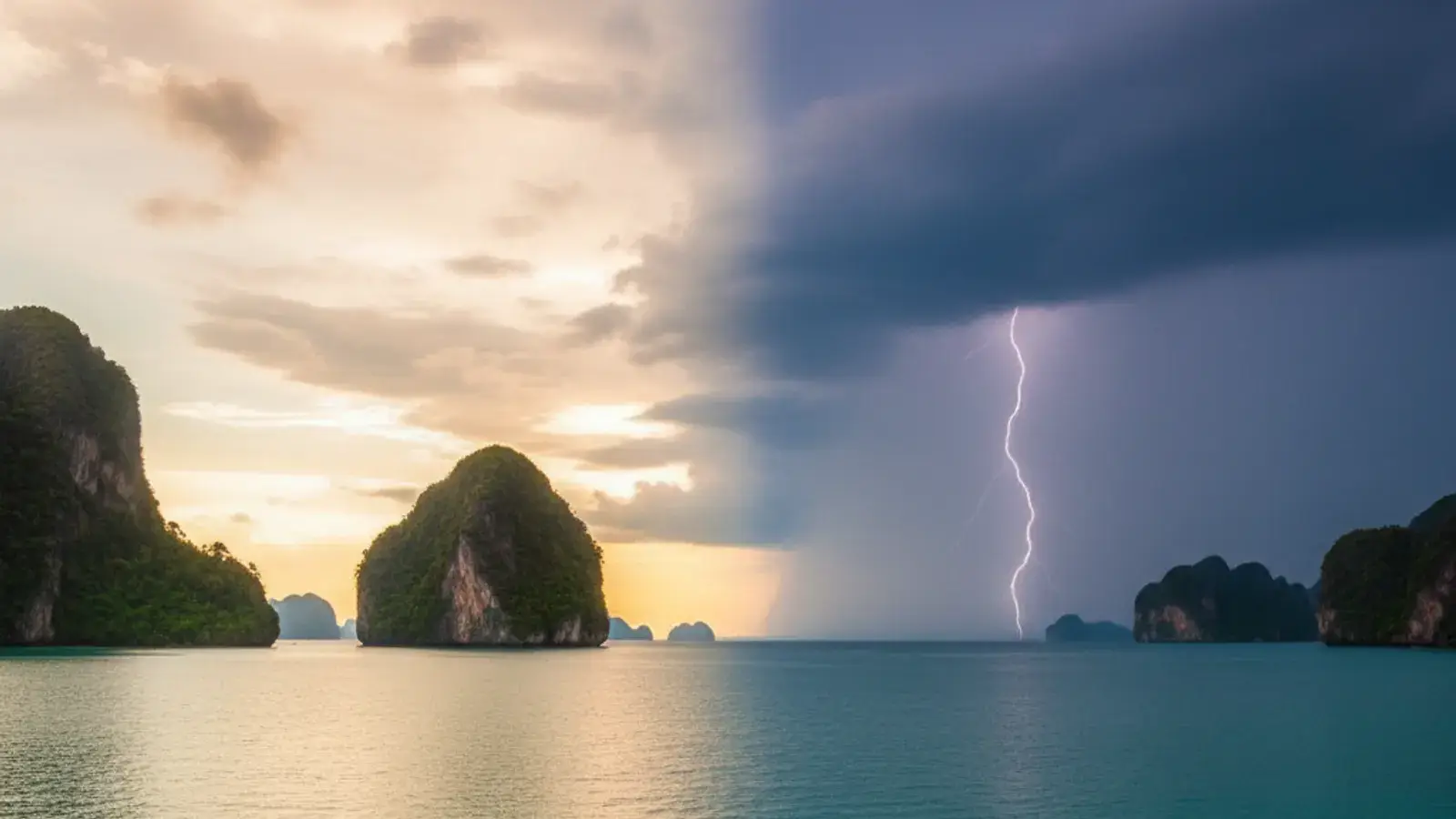
The best time to visit Krabi is November to February: monthly rainfall drops to a token 30–70 mm, the sea is calm, and every island tour runs daily — at peak prices, with rooms costing up to double their September rate. March to May is the hot season, with daytime highs around 34°C. May to October is the southwest monsoon, and September (~275 mm) and October (~325 mm) are the wettest months — which is exactly when hotels discount by 30–50 percent.
We run a cafe in Ao Nang and live here year-round, so we see every version of Krabi weather: the postcard-blue January mornings, the furnace afternoons of April, and the October downpours that empty the beach for an hour and then stop as if someone turned off a tap. Every one of those windows can be a good trip if you know what you are booking into, so this guide walks through the year month by month — rainfall, heat, sea conditions, whether the island tours actually run, and what happens to prices and crowds.
In short:
- Driest and calmest: November to February — all boat tours run daily, but prices peak and rooms can cost double their low-season rate.
- Hottest: March to May, daytime highs around 34°C; Songkran water festival on 13–15 April.
- Wettest: September (~275 mm) and October (~325 mm) — hotel discounts of 30–50 percent, occasional boat cancellations.
- Rain here means one or two short afternoon bursts, not all-day drizzle; mornings are often dry even in October.
- The sea stays 28–30°C every month of the year.
What is Krabi’s weather like month by month?
Krabi receives roughly 2,000 mm of rain in a typical year, most of it between May and October, and the sea stays a warm 28–30°C in every month. Rainfall and temperature figures below are long-term monthly averages from Climates to Travel.
| Month | Avg. rain | Daytime high | Sea & island tours | Crowds & prices |
|---|---|---|---|---|
| January | ~30 mm | 33°C | Calm seas; all tours running daily | Peak season; highest prices |
| February | ~45 mm | 34°C | Calm; excellent boat conditions | Peak; book rooms ahead |
| March | ~100 mm | 34°C | Calm but very hot on the water | Busy, slowly easing |
| April | ~145 mm | 34°C | Mostly calm; hottest, most humid month | Moderate; Songkran mid-month |
| May | ~170 mm | 33°C | Monsoon begins; occasional afternoon chop | Low season starts; prices drop |
| June | ~195 mm | 32°C | Showery but tours run most days | Quiet; good deals |
| July | ~200 mm | 32°C | Mixed; dry mornings common | Small summer-holiday bump |
| August | ~265 mm | 31°C | Rougher spells; some cancellations | Moderate; European holidays |
| September | ~275 mm | 31°C | Wet; longtail trips weather-dependent | Very quiet; lowest prices |
| October | ~325 mm | 31°C | Wettest month; rough seas possible | Very quiet; big discounts |
| November | ~180 mm | 31°C | Clearing fast; tours back to full schedule | Building; Loy Krathong |
| December | ~70 mm | 31°C | Calm and dry | Peak from mid-month; book early |
Two things the table cannot show. First, “rain” in Krabi rarely means a grey, drizzly day. It is mostly convective: heat builds, clouds stack up over the limestone karsts, and the rain falls in one or two intense bursts, usually in the late afternoon. Even in October, mornings are often dry. Second, averages hide variance — we have had bone-dry Septembers and a soggy Christmas week. Treat the table as odds, not a promise.
November to February: the classic dry season
This is the Krabi that fills the photographs: light winds, flat turquoise sea, and rain dropping to a token 30–70 mm a month by December and January. Every operator runs at full tilt — the 4 Islands longtail trips, Hong Islands speedboats, Phi Phi day tours, kayaking at Ao Thalane, rock climbing at Railay. Sunsets over Nopparat Thara Beach are at their most dependable, and the walk to Railay via longtail is a five-minute glide instead of a wet slog.
The trade-offs are exactly what you would expect. Accommodation prices peak — the same room can cost double its September rate between Christmas and mid-February — and popular spots get genuinely crowded. Railay’s beaches around midday, the Maya Bay stop on Phi Phi tours, and the Ao Nang strip at dinner time all run at capacity. If you visit now, book rooms and popular tours a few days ahead, and do the famous places at 8:00 rather than 11:00.
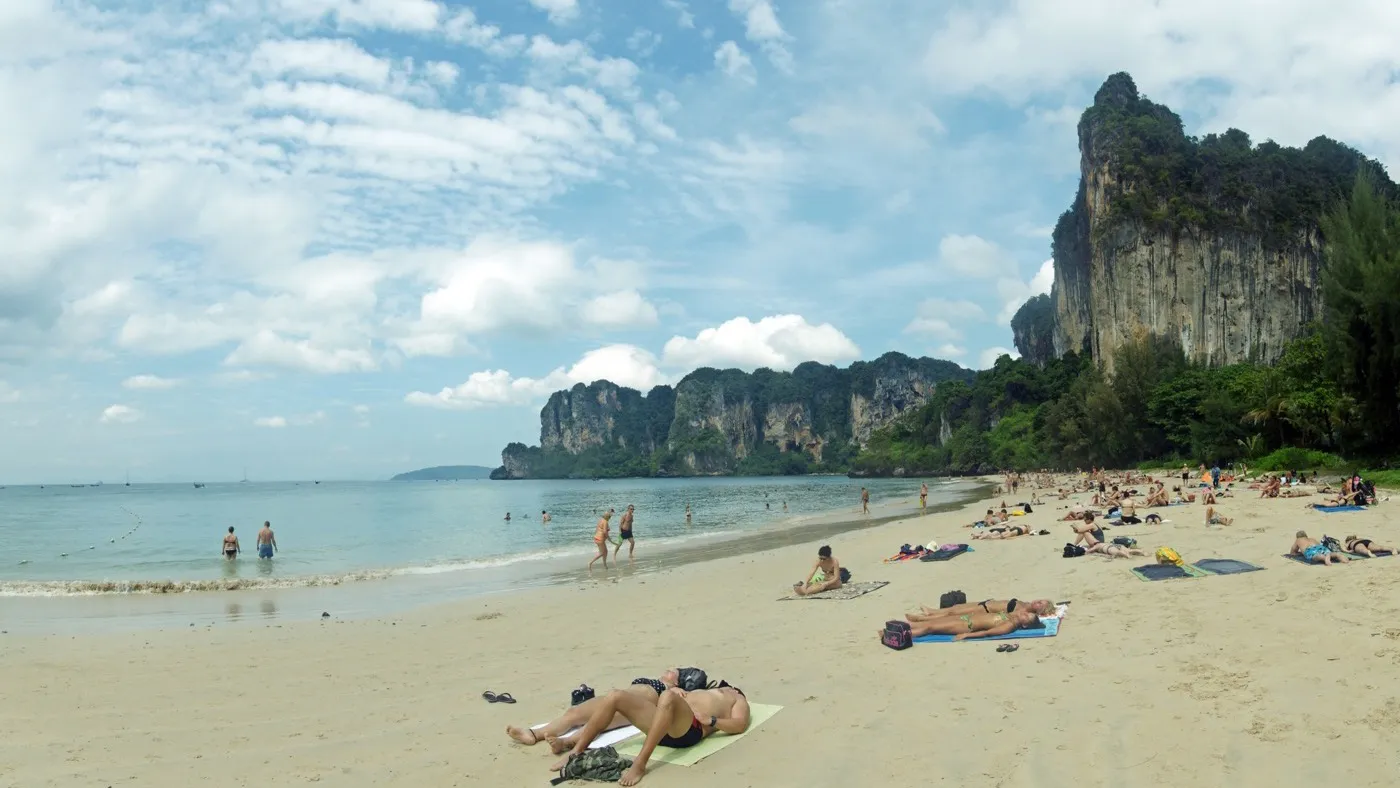
If you can only travel in this window, aim for late November or early December: dry-season weather, but before the holiday price surge.
Planning a dry-season trip? Start it at our table — we open at 8:00, five minutes from Nopparat Thara Beach. See the menu · Get directions
March to May: the hot season
March and April are technically still dry-ish, but they are the hottest months of the year, with daytime highs around 34°C and humidity climbing toward the monsoon. The sea stays calm and boat trips run as normal; the only thing you really have to respect is the heat. Carry water, use the shade on the boat, and plan something air-conditioned or shaded between 12:00 and 15:00. This is the season when a long lunch is a survival strategy, not an indulgence — it is when the shaded tables at Thongyib Thongyod earn their keep, an iced coffee stretched across the worst of the glare.
April brings Songkran, Thai New Year, officially celebrated on 13–15 April. In Ao Nang that means water fights along the beach road, music, and everyone — visitors very much included — getting soaked. Keep your phone in a dry bag and lean into it; it is one of the most fun days on the Thai calendar.
By May the southwest monsoon arrives, usually announced by spectacular evening thunderstorms. Prices fall noticeably in the second half of the month.
Is Krabi worth visiting in the green season?
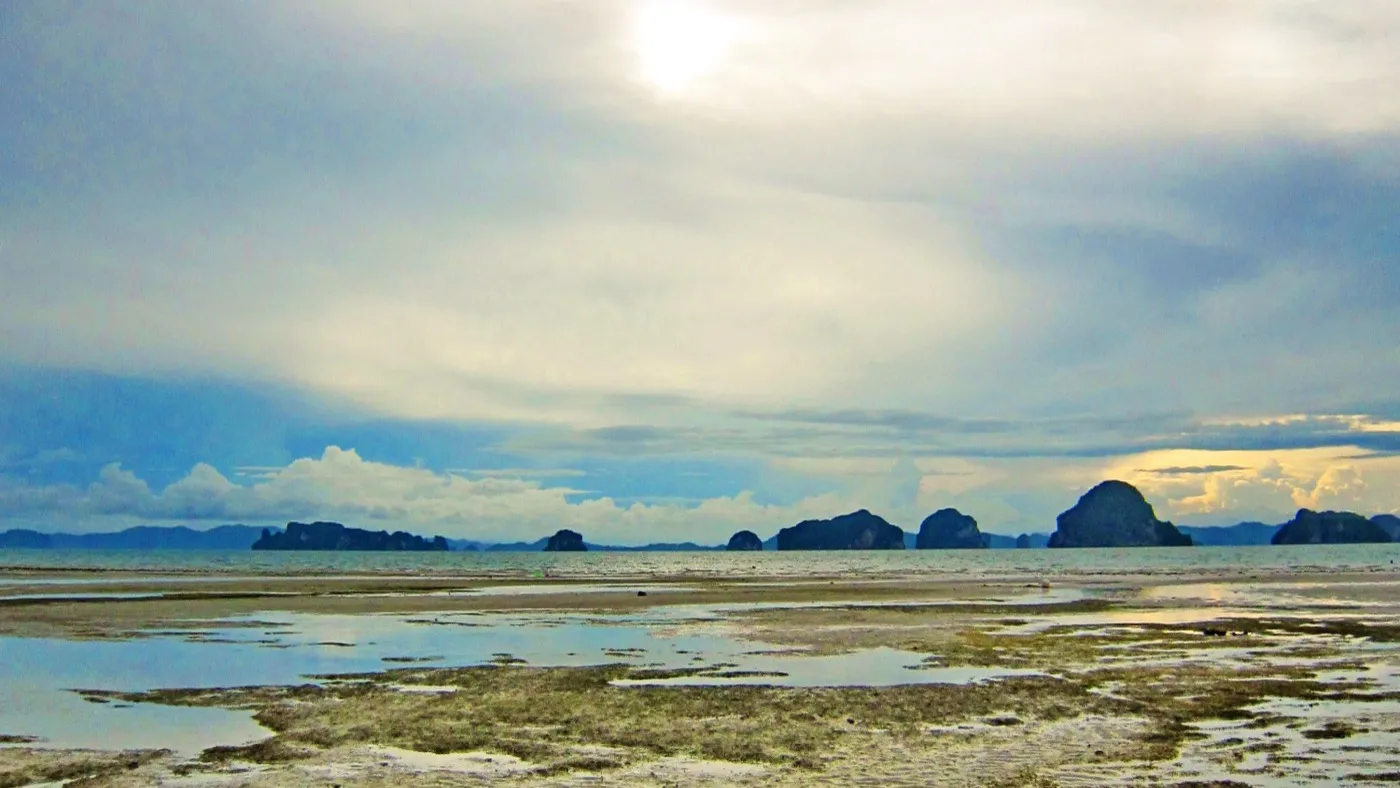
Yes — May to October is when we think Krabi is at its most underrated, provided you keep your plans flexible. This is the stretch the brochures skip, so here is the honest accounting.
What you gain:
- Prices. Hotels discount heavily from May to October, often by 30–50 percent, and tours are easier to negotiate. Flights are cheaper too.
- Space. Railay without queues, Nopparat Thara almost to yourself at low tide, no scramble for a dinner table.
- Scenery. The karsts turn vividly green, waterfalls around the province actually flow, and post-storm skies give you dramatic light that flat blue season never does.
- Rhythm. Rain concentrates in the afternoon, so a “front-load the day” itinerary — beach or boat in the morning, food, massage and shopping later — works most days.
What you risk:
- Cancelled boats. From roughly August to October, rough seas can cancel island tours at short notice, especially longtail trips. Speedboats handle chop better, but nothing is guaranteed. Never book a boat trip for your last day before a flight.
- September and October specifically. At ~275 mm and ~325 mm of rain respectively, these are the wettest months. You will still get dry windows, but plan for indoor alternatives — we wrote a full rainy-day guide to Ao Nang for exactly these afternoons.
- Closures. A few things wind down in deep low season — some smaller tour desks and beach bars shorten hours, and Maya Bay has in recent years closed for around two months (typically August–September) to let the bay recover, so check before booking a Phi Phi tour built around it.
For what it is worth, our cafe stays open daily 8:00–18:00 all year, low season included — green-season mornings on the terrace, watching storm clouds build over the karsts with a brunch plate and a slow coffee, are quietly our favourite part of the calendar.
Krabi in September: weather, rain and whether it is worth it
Krabi in September is wet, quiet and inexpensive. Long-term averages put rainfall around 275 mm for the month and daytime highs near 31°C, but that does not mean 30 days of continuous rain. A typical day may mix a usable morning with one or two heavy showers; a rough monsoon spell can also last several days.
September works best for travellers who value lower hotel prices and uncrowded beaches more than guaranteed island weather. Our dedicated Krabi in September guide covers boat cancellations, Ao Nang versus Railay, Krabi versus Koh Samui, packing and a flexible four-day plan.
When is Loy Krathong in Krabi?
Loy Krathong falls on the full moon of the twelfth Thai lunar month — usually in November — and the exact date shifts each year with the lunar calendar, so check it for your travel year. Locals float candlelit krathong (small banana-leaf rafts) on the water to pay respect to the water spirits and let go of the old year’s misfortunes. In Ao Nang the beaches and the ponds around town fill with candlelight; it is gentle, beautiful, and worth planning around if you can.
So when should you actually come?
- You want maximum certainty: late November to February. Pay more, get near-guaranteed boat days.
- You want value with good odds: May to July, or early November. Green landscapes, most tours running, real discounts.
- You want the lowest prices and do not mind gambling on weather: September–October. Keep plans flexible and front-load your mornings.
- You handle heat well: March–April is quieter than peak with calm seas — just respect the midday sun, and time it for Songkran if you like a party.
Quick answers
What is the cheapest time to visit Krabi? September and October. They are also the wettest months, which is exactly why rooms drop 30–50 percent and tours are easiest to negotiate.
Does it rain all day during Krabi’s rainy season? Rarely. Rain is convective — one or two intense bursts, usually in the late afternoon — and mornings are often dry even in October.
Do island tours run in low season? Most days, yes. From roughly August to October rough seas can cancel trips at short notice, so book a day ahead and never put a boat trip on your last day before a flight.
How warm is the sea in Krabi? 28–30°C in every month of the year. Swimming weather is never the problem.
Where should we eat before a morning boat tour? With us — Thongyib Thongyod opens at 8:00, five minutes’ walk from Nopparat Thara Beach, and a smoothie bowl sits far better on choppy water than a heavy fry-up. Beach pickups run 8:00–9:00, so an 8:00 table still makes the boat.
Practical info
- Booking tours: in high season, book a day or two ahead; in green season, book the night before once you have seen the forecast, and confirm the cancellation policy.
- Sea conditions: your hotel or any tour desk will know by early morning whether boats are going out. Rough-sea days are usually obvious from the beach.
- Packing: light rain jacket or poncho May–October, dry bag for phones year-round (longtail spray is a bigger threat than rain), and serious sunscreen March–May.
- Getting oriented: Ao Nang is Krabi’s main beach base; Krabi Town, 25–30 minutes inland, is where you will find the weekend market and cheaper guesthouses. You can find us at Ao Nang Landmark (Sealay Village) in Khlong Haeng, about five minutes’ walk from Nopparat Thara Beach.
Whenever your dates fall — peak-season blue or green-season dramatic — come dry off or cool down with us at Thongyib Thongyod. There is mango sticky rice and a plate of golden Thai desserts waiting either way.